
How to Recycle Electronics in Orange County
Meet The Author

Sean Smith
Table Of Contents
Before you get rid of that old laptop or smartphone, think about what’s still on it: photos, emails, banking information, and personal files. Simply tossing it in a bin or handing it over for recycling without a second thought can be a major security risk. Protecting your personal data is the critical first step in responsible e-waste disposal. This article will walk you through everything you need to know, from securely wiping your devices to understanding your options. We’ll cover the essential steps for how to recycle electronics safely, ensuring your private information stays private while you stay compliant with California’s disposal laws.
How to Properly Recycle Electronics in Orange County
Old computers, TVs, printers, and other electronics cannot go in the trash in California. The state’s Electronic Waste Recycling Act (SB 20) classifies most electronics as hazardous waste due to lead, mercury, cadmium, and other toxic materials inside them. Throwing e-waste in the garbage is illegal and carries fines up to $25,000 per violation.
Need old electronics hauled away? Junk Smiths picks up e-waste, computers, TVs, and more across Orange County. Book your free estimate or call (714) 369-8886.
This guide covers everything Orange County residents need to know about e-waste disposal: what counts as e-waste, where to recycle it for free, California disposal laws, data security concerns, and when professional removal makes the most sense.
What’s Considered E-Waste in California?
California defines e-waste broadly. The following items are classified as covered electronic devices (CEDs) or hazardous electronic waste:
| Category | Examples | Hazardous Materials Inside |
|---|---|---|
| Screens and displays | CRT monitors, LCD/LED TVs, laptop screens, tablets | Lead (CRT), mercury (LCD backlights) |
| Computers | Desktops, laptops, servers, hard drives | Lead solder, cadmium, beryllium |
| Printers and peripherals | Printers, scanners, copiers, fax machines | Toner (carbon black), lead, chromium |
| Mobile devices | Cell phones, smartphones, tablets, e-readers | Lithium batteries, cadmium, lead |
| Batteries | Lithium-ion, NiCd, NiMH, lead-acid | Lithium, cadmium, lead, sulfuric acid |
| Cables and accessories | Power cords, chargers, adapters, mice, keyboards | PVC, lead solder (minimal) |
| Home electronics | DVD/Blu-ray players, game consoles, routers, modems | Lead solder, brominated flame retardants |
| Kitchen/home tech | Smart speakers, robot vacuums, smart thermostats | Lithium batteries, various metals |
Key rule: If it has a circuit board, battery, or screen, it is probably e-waste and needs special disposal in California.
E-Waste Laws Across the U.S.
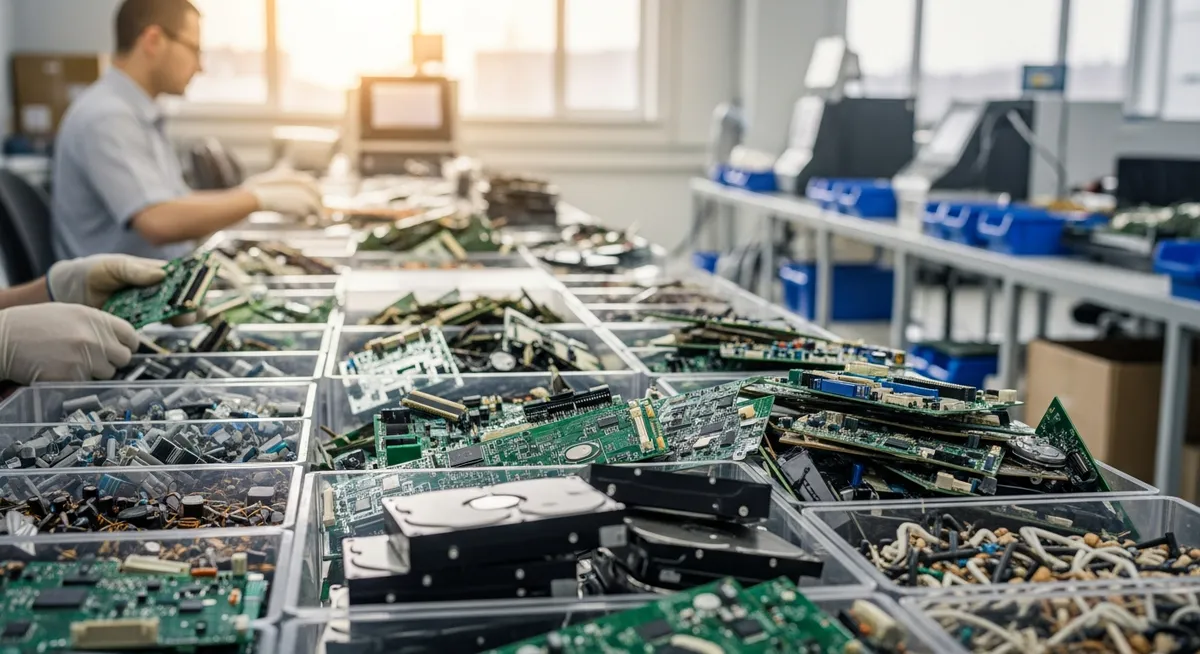
While California’s laws are some of the strictest, it’s not the only state taking a hard line on electronic waste. Currently, 25 states have laws that require residents and businesses to recycle old electronics rather than sending them to a landfill. These regulations are a direct response to the growing global e-waste problem. In 2019 alone, the world generated over 53 million tons of electronic waste, but only about 17% of it was properly collected and recycled. The rest often ends up in landfills, where toxic materials can leach into the soil and water.
The environmental stakes are high, but so are the benefits of doing things the right way. Proper recycling doesn’t just prevent pollution; it also conserves valuable resources and energy. For example, the U.S. Environmental Protection Agency estimates that recycling one million laptops saves enough energy to power more than 3,500 American homes for an entire year. When you partner with a responsible junk removal service, you’re not just clearing out clutter—you’re ensuring your old devices are handled by certified recyclers who protect your data and the environment.
Why Proper E-Waste Disposal Matters
Beyond just following California law, understanding why proper e-waste disposal is so critical can make the process feel less like a chore and more like a meaningful contribution. When you toss out an old phone or computer, you’re dealing with a complex mix of both hazardous toxins and surprisingly valuable resources. Making the right choice about its disposal has a ripple effect on our environment and economy, turning old junk into a genuine opportunity.
The Environmental Stakes
Old electronics are packed with toxic substances like lead, mercury, and cadmium. When they end up in a landfill, these materials can leach into the soil and water, causing serious environmental harm. The good news is that these devices also contain valuable materials that can be recovered and reused. The EPA notes that recycling just one million laptops saves enough energy to power over 3,500 homes for a year. Similarly, recycling a million cell phones can recover thousands of pounds of copper, silver, and even gold. By choosing to recycle, you’re not just preventing pollution; you’re actively contributing to a circular economy that conserves natural resources and reduces energy consumption.
The Economic Benefits of Recycling
The positive impact of e-waste recycling extends directly to our economy. The process of collecting, sorting, and processing old electronics helps create jobs and supports local businesses dedicated to responsible disposal. When companies recover precious metals and other components from old devices, it reduces the need for new mining and manufacturing, which can lower production costs for new goods. This creates a more sustainable and efficient supply chain. For businesses and property managers, partnering with a professional service like Junk Smiths ensures that their e-waste is handled correctly, keeping them compliant with regulations while also supporting this green economic cycle. It’s a smart decision that benefits your bottom line and the community.
What Can (and Can’t) Be Recycled?
While California has clear rules about what qualifies as e-waste, the recycling process isn’t one-size-fits-all. Most items with a plug, battery, or screen can be recycled, but some require extra steps, and others are surprisingly difficult to process. Knowing the difference saves you time and ensures your old tech is handled correctly. For example, a simple computer mouse is much easier to recycle than a large appliance or a device containing a powerful lithium-ion battery. Understanding these nuances is key to responsible disposal, especially for items that pose a safety risk or contain sensitive personal information. Before you load up your car, it’s worth checking the specific requirements for your items.
Many recycling centers and retail take-back programs have specific limitations on what they will accept. These rules often relate to the size, condition, or type of electronic device. Commercial clients, like property managers or businesses upgrading their office equipment, often find that standard drop-off locations won’t accept their bulk loads. This is where knowing the local options becomes critical. For residents and businesses in Orange County, navigating these rules can be tricky, but a little preparation goes a long way in making sure your e-waste ends up in the right place without any hassle or unexpected rejections at the drop-off site.
Items That Require Special Handling
Before you hand over your old electronics, a little prep work is essential for protecting your privacy and ensuring safety. According to the U.S. Environmental Protection Agency, you should always delete all personal data and perform a factory reset on devices like phones, laptops, and tablets. It’s also critical to remove any batteries, especially lithium-ion ones. These batteries are a fire hazard and cannot go into regular trash or recycling bins; they must be recycled separately at a facility equipped to handle them. Taking these steps not only safeguards your information but also prevents dangerous situations at recycling centers.
What Retail Programs Often Don’t Accept
Retail take-back programs are convenient for small, personal electronics, but they have their limits. For instance, Best Buy’s popular program is designed for residential customers and has clear restrictions. Their recycling FAQ notes that they generally don’t accept items from businesses, anything that poses a health or safety risk (like leaking batteries), or very large TVs that don’t fit their size criteria. This can be a major roadblock for real estate agents clearing out a property or businesses trying to dispose of old office equipment. If you have multiple items or something particularly large or heavy, a professional junk removal service is often a more practical solution.
A Special Note on Old CRT TVs
If you have an old, boxy tube TV (a CRT, or cathode ray tube model), you might find it’s the hardest piece of e-waste to get rid of. These relics contain a large amount of lead in the glass, making them hazardous. Unfortunately, the recycling process for them is complex and expensive. As some municipal waste experts note, these old TVs are often no longer recycled because it’s too expensive and there aren’t good markets for their materials. While they can’t be put in your curbside trash, a licensed hauler like Junk Smiths can ensure they are transported and disposed of in compliance with California law, saving you the heavy lifting and logistical headache.
First: Can Your Electronics Be Reused?
Before you schedule a pickup or head to a recycling center, it’s worth asking if your old electronics still have some life left in them. Recycling is a fantastic option for broken or truly obsolete items, but reusing a functional device is even better for the environment. It extends the product’s lifespan, conserves the resources used to manufacture new ones, and can directly benefit someone in your community. If your old laptop, tablet, or TV still works, one of these options might be the perfect first step.
Donate Working Devices to a Good Cause
If your electronics are still in good working condition, donating them is a wonderful way to give back. Many local charities, non-profits, and community centers are in constant need of functional tech. A computer you no longer use could help a student with their homework, while an old tablet could help a senior connect with family. Organizations like Goodwill of Orange County or local shelters often accept these items to support their programs or sell them in their thrift stores to fund their missions. Before you drop anything off, just be sure to wipe your personal data to protect your privacy.
Give Items Away Through Local Networks
You might be surprised by who could use your old electronics. Local online groups are a fast and easy way to find a new home for items you no longer need. Platforms like The Freecycle Network or local Buy Nothing Project groups on Facebook connect you with neighbors who are actively looking for specific things. Posting a working monitor, printer, or gaming console can feel much better than just getting rid of it. It’s a simple, direct way to reduce waste and help someone out at the same time, clearing your space without sending a perfectly good item to be dismantled.
Consider Upgrading or Repairing
Sometimes, an electronic device feels outdated when all it really needs is a minor fix or a simple upgrade. Before you decide to replace a sluggish laptop or a phone with a cracked screen, look into your options for repair. A new battery, more RAM, or a screen replacement can be far cheaper than buying a brand-new device. According to the U.S. Environmental Protection Agency, extending the life of your electronics is one of the most effective ways to reduce e-waste. A quick trip to a local repair shop could save you money and keep a device running for several more years.
Where to Recycle Electronics for Free in Orange County
Drop Off at OC Waste & Recycling Centers
Orange County’s four permanent Household Hazardous Waste centers accept all types of e-waste from residents for free:
| Location | Address | Hours |
|---|---|---|
| Anaheim | 1071 N. Blue Gum St., Anaheim, CA 92806 | Tue-Sat, 9 AM to 3 PM |
| Huntington Beach | 17121 Nichols Ln., Huntington Beach, CA 92647 | Tue-Sat, 9 AM to 3 PM |
| Irvine | 6411 Oak Canyon, Irvine, CA 92618 | Tue-Sat, 9 AM to 3 PM |
| San Juan Capistrano | 32250 La Pata Ave., San Juan Capistrano, CA 92675 | Tue-Sat, 9 AM to 3 PM |
Bring a valid California ID or utility bill proving OC residency. No appointment needed for most items.
Find a Retailer Take-Back Program
- Best Buy: Accepts up to 3 items per household per day for free recycling. TVs and monitors up to 32 inches accepted. Larger TVs cost $29.99.
- Staples: Accepts computers, laptops, tablets, and small electronics for free. Includes data destruction.
- Apple Store: Accepts any Apple product for free recycling. Also accepts non-Apple trade-ins for credit.
- Samsung, Dell, HP: Offer mail-back recycling programs for their branded products.
Major Retailers like Best Buy and Walmart
You don’t always have to go to a designated hazardous waste facility to get rid of old electronics. Many major retailers offer convenient take-back programs that make recycling simple. Best Buy is one of the largest retail recyclers in the country, accepting a wide range of electronics and appliances, regardless of where you originally purchased them. Since 2009, they’ve recycled over two billion pounds of e-waste, making them a reliable option for your old gadgets. Similarly, Walmart partners with recycling management companies to provide free drop-off locations in many states, helping you responsibly dispose of items during a regular shopping trip.
Office Supply Stores for Ink and Toner
Your local office supply store is another excellent resource, especially for smaller electronics and computer peripherals. Staples, for example, has a robust recycling program that accepts everything from old computers and laptops to tablets and monitors for free. One of the biggest advantages of their service is that it includes data destruction, giving you peace of mind that your personal information is handled securely. This is a fantastic option if you’re clearing out a home office and want to ensure your sensitive files are properly wiped before the device is recycled. It’s an easy, no-cost way to handle e-waste responsibly.
Cell Phone Carrier Buyback Programs
Before you toss that old smartphone in a drawer, check if you can get something back for it. Many electronics companies and cell phone carriers have trade-in or buyback programs that offer store credit or gift cards for your used devices. Apple’s GiveBack program is a well-known example, allowing you to trade in eligible products for credit toward your next purchase. According to Consumer Reports, Amazon also offers gift cards for a wide variety of electronics, not just their own. These programs are a win-win: you clear out clutter, get a little cash back, and ensure your old device is recycled or refurbished correctly.
Keep an Eye Out for Community Collection Events
OC Waste and Recycling hosts periodic community e-waste collection events at locations throughout Orange County. These events accept large quantities and are ideal for office cleanouts or accumulated electronics. Check oclandfills.com for the latest schedule.
Use National Recycling Locators and Mail-Back Services
If getting to a physical drop-off center is a hassle, several national online tools can point you in the right direction. Websites like Earth911 are fantastic resources; you can simply enter your ZIP code and the type of item you need to recycle to find the nearest certified facility. It takes the guesswork out of the process, especially for unusual items. For smaller things like rechargeable batteries and old cell phones, Call2Recycle maintains a huge network of drop-off bins, often located in stores you already visit, like hardware or home improvement stores. These locators make it easy to find a responsible home for your old tech while you’re out running errands.
For even more convenience, many manufacturers and retailers offer mail-back programs. This is a great option if you can’t transport bulky items yourself or live far from a designated collection site. It’s a simple way to handle e-waste responsibly without leaving home. For instance, many major electronics brands have their own programs, and retailers like Best Buy also provide mail-in services for certain devices. Walmart partners with MRM Recycling to facilitate mail-back options in many states. You just package up your old electronics according to their instructions and ship them off for proper disposal, ensuring they stay out of the landfill.
Protecting Your Data Before Recycling Electronics
Before recycling any device that stores personal data, take these steps:
- Back up important files to an external drive or cloud storage.
- Sign out of all accounts (email, social media, banking, streaming services).
- Factory reset the device. For computers, use the built-in reset function. For phones and tablets, perform a factory reset from settings.
- For hard drives with sensitive data, use a data destruction tool like DBAN (Darik’s Boot and Nuke) to overwrite the drive. For maximum security, physically destroy the hard drive with a drill or hammer.
- Remove SIM cards and SD cards from phones and tablets.
Got a garage full of old electronics? Junk Smiths picks up e-waste from your home or office, same day. Call (714) 369-8886.
DIY or Hire a Pro? Choosing Your E-Waste Disposal Method
| Factor | DIY (Drop-Off or Retailer) | Professional (Junk Smiths) |
|---|---|---|
| Best for | A few small items | Large quantities, bulky items, office cleanouts |
| Cost | Free | Starting at $99 for a small load |
| Time | 1 to 2 hours (driving, waiting) | 15 to 30 minutes |
| Pickup from home? | No (you drive to drop-off) | Yes, from any room |
| Weight limits | Some apply (Best Buy: 3 items/day) | No limits |
| Handles TVs and monitors? | Some (size/fee restrictions) | Yes, any size |
| Can combine with other junk? | No | Yes, one trip for everything |
| Data destruction available? | Some retailers offer it | We can arrange certified destruction |
| Commercial quantities? | Usually not | Yes, office and warehouse cleanouts |
The Junk Smiths Process for Safe E-Waste Removal
- Book online or call (714) 369-8886. Tell us what electronics need to go.
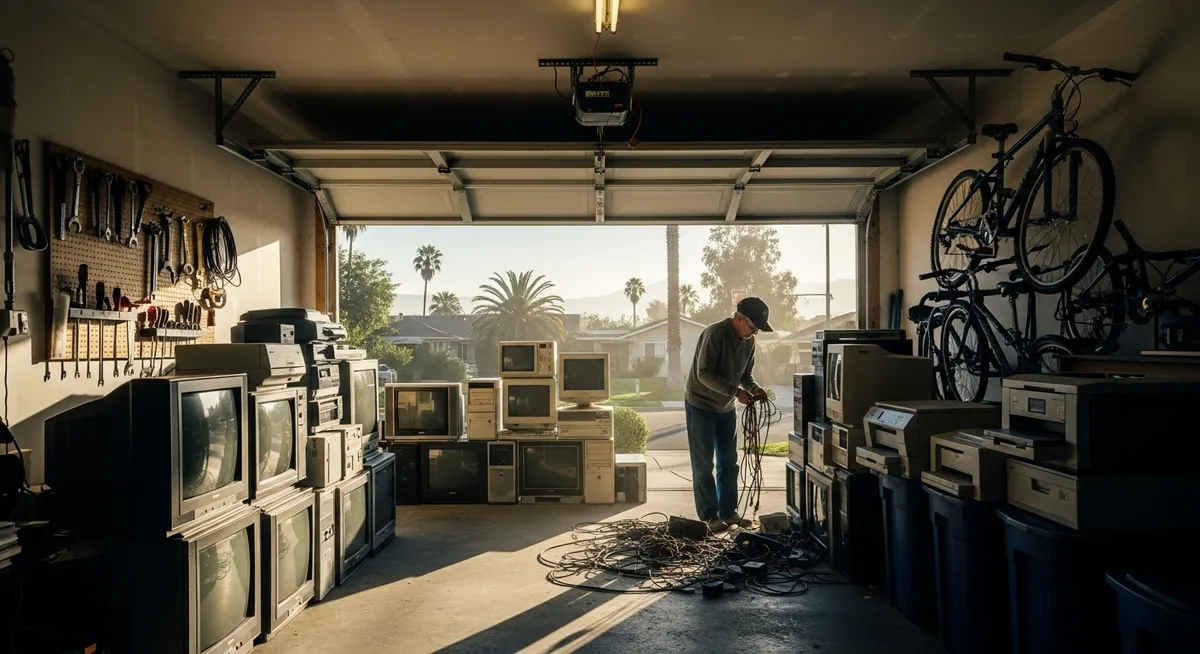
- We arrive and collect everything. Our crew picks up from any location in your home or office: closets, garages, server rooms, storage units.
- We sort and transport. E-waste is separated from other items and taken to a certified e-waste recycler.
- Responsible recycling. Our recycling partners are certified under California’s e-waste program. Precious metals (gold, silver, platinum, copper) are recovered. Hazardous materials are safely extracted and processed. Plastics are shredded and recycled where possible.
- Certificate of recycling available upon request for businesses that need documentation for compliance.
This is ideal during estate cleanouts (decades of accumulated electronics), office relocations, spring cleaning projects, and IT equipment upgrades.
What is California’s E-Waste Recycling Fee?
When you buy a new screen-based device in California, you pay an Electronic Waste Recycling Fee at the point of sale:
- $4 for screens under 15 inches
- $5 for screens 15 to 35 inches
- $6 for screens over 35 inches
This fee funds the state’s e-waste collection and recycling infrastructure. It is the reason drop-off at HHW centers and many retailers is free: you already paid for it when you bought the device.
Your Pre-Recycling Checklist
- Check if the device still has value. Working laptops, tablets, and smartphones often have resale value on eBay, Swappa, or Facebook Marketplace. Even older models can sell for $20 to $100. A working iPhone 11, for example, still fetches $80 to $150.
- Trade in at retailers. Apple, Best Buy, Amazon, and Samsung all offer trade-in programs that give store credit for working devices. Apple’s trade-in values are often the highest.
- Consolidate before disposal. Gather all e-waste from every room, garage, and closet before scheduling a drop-off or pickup. Most people underestimate how many old chargers, cables, and forgotten devices they have.
- Remove batteries from devices when possible. Loose lithium-ion batteries should be taped at the terminals to prevent short circuits during transport. Never put loose lithium batteries in a bag with metal objects.
- Keep original packaging for high-value returns. If you plan to sell or trade in a recent device, the original box and accessories can increase the value by 10% to 20%.
- Bundle with other junk removal. If you are already scheduling a bulk junk removal or spring cleaning cleanout, add the electronics to the same load and save a separate trip.
Where Does Your E-Waste Go After You Drop It Off?
Certified e-waste recyclers follow a multi-step process to recover materials and safely handle hazardous components:
- Manual sorting: Workers separate devices by type (computers, TVs, phones, batteries). Items with potential resale value are set aside for refurbishment.
- Data destruction: Hard drives and storage media are either degaussed (magnetically wiped), shredded, or both. Certified facilities issue certificates of destruction for businesses.
- Hazardous component removal: CRT tubes are carefully separated to extract lead. LCD panels have mercury-containing backlights removed. Batteries are sorted by chemistry for specialized processing.
- Shredding and separation: Non-hazardous components go through industrial shredders. Magnets separate ferrous metals (steel). Eddy current separators extract non-ferrous metals (aluminum, copper). Air classifiers separate plastics from other materials.
- Precious metal recovery: Circuit boards are processed to extract gold, silver, platinum, and palladium. One ton of circuit boards contains roughly 40 to 800 times more gold than one ton of gold ore.
- Responsible disposal: Materials that cannot be recycled (certain plastics, contaminated components) are disposed of at licensed hazardous waste facilities rather than landfills.
The Importance of Certified E-Waste Recyclers
When you hand over your old electronics, you’re also trusting someone with your personal data and a mix of hazardous materials. This is why choosing a certified e-waste recycler is so critical. Facilities with certifications like R2 or e-Stewards are held to the highest standards for both data security and environmental protection. They follow a strict, multi-step process to ensure sensitive information is completely destroyed and that toxic components like lead and mercury are handled safely, keeping them out of our soil and water. It’s not just about avoiding fines; it’s about responsible stewardship. These certified partners ensure that valuable materials are recovered, which, according to the US EPA, saves a massive amount of energy—enough from recycling one million laptops to power over 3,500 homes for a year. At Junk Smiths, we exclusively partner with these certified facilities, so you can be confident your e-waste is managed the right way.
Frequently Asked Questions
Can you throw electronics in the trash in California?
No. California law (SB 20) prohibits disposing of most electronics in regular trash. Items with screens, batteries, or circuit boards are classified as hazardous waste and must be recycled at a certified facility or collection point.
Where can I drop off old electronics for free in Orange County?
Orange County has four free HHW collection centers in Anaheim, Huntington Beach, Irvine, and San Juan Capistrano. Retailers like Best Buy and Staples also accept electronics for free recycling. Community collection events are held periodically throughout the county.
How do I dispose of a large old TV?
CRT (tube) TVs are heavy and contain significant amounts of lead. Drop them off at an OC HHW center for free, or schedule professional pickup with Junk Smiths. Best Buy accepts TVs up to 32 inches for free and charges $29.99 for larger units. Do not attempt to break open a CRT; the vacuum tube inside is dangerous.
Is it safe to throw away old batteries?
Alkaline batteries (AA, AAA, C, D) can go in regular trash in California. However, rechargeable batteries (lithium-ion, NiCd, NiMH) and lead-acid batteries are hazardous waste and must be recycled. Drop them off at any HHW center, Best Buy, Home Depot, or Lowe’s battery recycling bin.
How do I erase data from an old computer before recycling?
Use the built-in factory reset function or a data destruction tool like DBAN to overwrite the hard drive. For maximum security, physically remove and destroy the hard drive before recycling the computer. Some recyclers and retailers (like Staples) offer certified data destruction services.
Does Junk Smiths pick up e-waste from businesses?
Yes. We handle commercial e-waste removal for offices, warehouses, and retail locations. This includes computers, servers, monitors, printers, networking equipment, and other IT hardware. We can provide a certificate of recycling for compliance documentation.
What happens to recycled electronics?
Certified recyclers disassemble electronics and recover valuable materials: gold, silver, platinum, and copper from circuit boards; steel and aluminum from casings; glass from screens. Hazardous materials (lead, mercury, cadmium) are safely extracted and processed. Approximately 80% to 95% of materials in electronics can be recovered.
Can I recycle old cell phones?
Yes. Drop off old cell phones at any HHW center, Best Buy, Staples, or Apple Store. Many carriers (AT&T, Verizon, T-Mobile) also accept old phones in-store. Remember to factory reset the phone and remove your SIM card before recycling.
Key Takeaways
- Protect Your Personal Information First: Before recycling any device, back up your important files and perform a factory reset to wipe all personal data. This simple step is crucial for preventing identity theft and protecting your privacy.
- Recycle E-Waste Legally and for Free: California law prohibits throwing electronics in the trash. You can dispose of them correctly at no cost by using Orange County’s HHW centers or taking advantage of retailer programs at places like Best Buy and Staples.
- Know When to Call for Help: While drop-off locations are great for a few small items, a professional junk removal service is the best choice for bulky electronics, large quantities, or commercial cleanouts, saving you time and heavy lifting.
Related Articles
- How to Dispose of E-Waste in Orange County (2026)
- How to Dispose of Electronics and E-Waste in Orange County – Junk Smiths: Junk Removal Huntington Beach
- Orange County Recycling Regulations | Guide & Accepted Items