

A bathroom demolition is one of the messiest parts of any remodel. Whether you are gutting a master bath or refreshing a small powder room, the debris adds up fast. Tiles, drywall, old vanities, plumbing fixtures, and subflooring all need to go before anything new can be installed. Knowing what to expect from your bathroom demo, what it costs, and how to handle the debris makes the entire renovation smoother and less stressful.
Call Junk Smiths at 714-369-8886 or book online now for fast, eco-friendly bathroom demolition debris removal in Orange County and Los Angeles.
In this guide, we break down the full bathroom demolition process, cover the types of debris generated, compare DIY versus professional debris hauling, outline costs, and explain how to prepare your home for the work ahead. If you live in Orange County or Los Angeles, you will also find local tips about older homes that may contain hazardous materials like asbestos and lead paint. You can also check out our fence removal for Orange County pricing.
Bathroom demolition is a systematic process that involves stripping a room down to its structural bones. The scope of your bathroom demo depends on whether you are doing a partial update or a full gut renovation. Here is a typical breakdown of what happens during the process:
A standard full bathroom demo takes one to three days depending on the size of the room and the number of layers hiding behind the walls. The real challenge is not the demolition itself; it is managing the mountain of debris that comes out.
Bathroom renovations produce a surprising volume of heavy, bulky, and sometimes hazardous waste. Understanding what comes out of the room helps you plan for proper disposal. Here are the main categories of bathroom demolition debris:
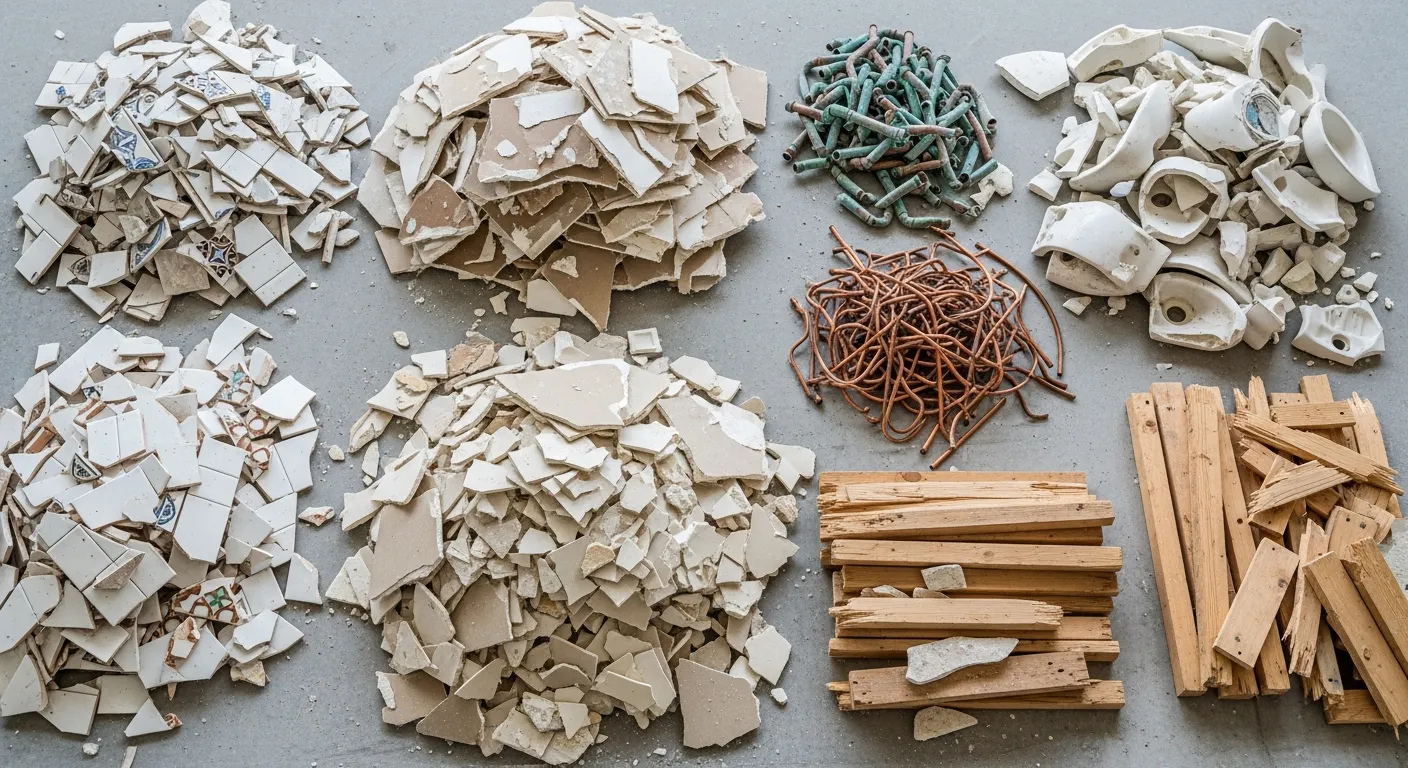
Tile is one of the heaviest materials removed during a bathroom demo. A single bathroom can produce 200 to 500 pounds of broken tile depending on the room size and whether both walls and floors are tiled. Tile is not recyclable through standard curbside programs, so it must be hauled to a construction and demolition (C&D) landfill or recycling facility.
Drywall removal cost depends on the square footage involved. Standard drywall can often be recycled, but cement backer board typically goes to a C&D facility. Expect 10 to 20 sheets of material from a full bathroom gut.
Old toilets, sinks, bathtubs, and shower bases add significant weight. A cast-iron bathtub alone can weigh 300 to 500 pounds. Porcelain fixtures are not accepted in regular recycling, but metal components like faucets and drain assemblies can be recycled as scrap metal.
Copper pipes, PVC piping, shut-off valves, and fittings are removed when updating or relocating plumbing. Copper pipe has scrap value and should be separated for recycling.
Wood vanities, medicine cabinets, and storage units come out during demo. Depending on their condition, these items can be donated to organizations like Habitat for Humanity ReStore or recycled.
Vinyl, linoleum, tile, and damaged plywood subflooring all generate bulky waste. Water-damaged subflooring is common in bathroom remodels and must be replaced for structural integrity.
Bathroom mirrors and glass shower doors require careful removal and disposal. Tempered glass from shower enclosures can be recycled at specialty facilities, but standard mirror glass usually cannot.
Bathroom demolition cost varies based on the size of the room, the scope of work, and your location in Orange County or Los Angeles. Here is a detailed cost breakdown for typical bathroom demo projects:
| Item | Cost Range | Notes |
|---|---|---|
| Full bathroom demo (labor) | $1,000 to $3,500 | Varies by room size and complexity |
| Demo cost per square foot | $10 to $25 | Higher end for tile-heavy bathrooms |
| Drywall removal cost | $1 to $3 per sq ft | Standard drywall; cement board costs more |
| Tile removal | $3 to $6 per sq ft | Depends on adhesive type |
| Bathtub removal | $150 to $500 | Cast iron costs more due to weight |
| Toilet removal | $50 to $150 | Includes capping the drain |
| Vanity removal | $75 to $200 | Includes disconnecting plumbing |
| Debris hauling | $250 to $800 | Full truckload from a bathroom demo |
| Dumpster rental (alternative) | $300 to $600 | 10-yard container for 3 to 7 days |
| Hazardous material testing | $200 to $600 | Asbestos/lead testing in pre-1980 homes |
| Asbestos abatement (if found) | $1,500 to $5,000+ | Required by California law |
For a standard 50 square foot bathroom in Huntington Beach, expect total demolition costs between $1,500 and $4,000 including labor and debris removal. Larger master bathrooms in cities like Irvine, Newport Beach, or Long Beach can run $3,000 to $6,000+ depending on the materials involved.
Ready to get that demolition debris out of your way? Call Junk Smiths at 714-369-8886 for a free, no-obligation quote on bathroom debris removal anywhere in Orange County or LA.
One of the biggest decisions during a bathroom remodel is whether to handle debris removal yourself or hire professionals. Here is a detailed comparison to help you decide:
| Factor | DIY Debris Removal | Professional Debris Hauling |
|---|---|---|
| Cost | $100 to $400 (dump fees, truck rental) | $250 to $800 (full service) |
| Time required | 4 to 8 hours per load | 30 to 60 minutes on site |
| Physical labor | Heavy lifting required (tile, tubs) | Crew handles all lifting |
| Vehicle needed | Pickup truck or trailer rental | Company brings their own truck |
| Number of trips | 2 to 4 trips to the dump | Single trip, single visit |
| Dump fees | $30 to $80 per load | Included in price |
| Hazardous materials | Must identify and handle yourself | Trained for hazmat identification |
| Recycling and donation | You sort and deliver to facilities | Company sorts and recycles for you |
| Injury risk | High (sharp tiles, heavy fixtures, dust) | Low (insured, equipped crew) |
| Scheduling flexibility | Your schedule only | Same-day or next-day availability |
| Cleanup included | No, you handle all cleanup | Yes, broom-clean when they leave |
| Insurance coverage | None, liability is yours | Fully licensed and insured |
| Environmental compliance | Must research local regulations | Company ensures proper disposal |
For most homeowners in Orange County and Los Angeles, professional debris removal is the better value. The time savings alone make it worthwhile when you factor in multiple dump runs, vehicle rental costs, and the physical strain of loading hundreds of pounds of tile and drywall.
Proper preparation minimizes damage to your home and keeps the demolition on schedule. Follow these steps before the first sledgehammer swings:
Remove all personal items, towels, toiletries, decorations, and anything stored in the bathroom. Take down curtain rods, towel bars, and wall-mounted accessories. If there is a linen closet inside the bathroom, empty it completely.
Hang plastic sheeting over doorways to contain dust. Lay drop cloths or cardboard along hallways where debris will be carried out. Tape off HVAC vents in the bathroom and nearby rooms to prevent dust from spreading through your ductwork.
Turn off the water supply to the bathroom at the shut-off valves or the main line. If electrical work is involved, kill the circuit breaker for the bathroom. Label these clearly so no one accidentally turns them back on during demolition.
Identify the shortest route from the bathroom to the front door or garage. Protect flooring along this path with heavy-duty drop cloths or ram board. If you are on an upper floor, plan for how heavy items like bathtubs will get downstairs safely.
Designate a spot in the driveway or yard for debris staging. This is where materials will be sorted before being loaded into a truck or dumpster. Having a clear staging area speeds up removal significantly.
Many Orange County communities have HOA restrictions on dumpster placement, noise hours, and contractor parking. Check with your HOA before scheduling demolition to avoid fines or delays.
Bathroom demolition carries real safety risks, especially in older homes found throughout Huntington Beach, Anaheim, Fullerton, and other established Orange County neighborhoods. Here are the critical hazards to watch for:
Homes built before 1980 in Orange County and Los Angeles may contain asbestos in floor tiles, pipe insulation, joint compound, and textured ceiling finishes. California law requires professional testing before disturbing suspected materials. Never scrape, sand, or break materials that might contain asbestos. A certified asbestos abatement contractor must handle removal, with costs typically ranging from $1,500 to $5,000+ depending on the scope.
Homes built before 1978 may have lead-based paint on walls, trim, and cabinetry. Demolition that disturbs lead paint creates toxic dust that is especially dangerous for children and pregnant women. In California, contractors performing renovation work in pre-1978 homes must be EPA RRP (Renovation, Repair, and Painting) certified.
Bathrooms are high-moisture environments. When you open up walls, it is common to find mold growth on drywall backing, studs, and subfloor. Black mold (Stachybotrys) requires professional remediation. Smaller areas of surface mold can often be treated with antimicrobial solutions before new materials are installed.
Water damage from leaking showers, tubs, or toilets can weaken floor joists and wall framing over time. During demolition, inspect all exposed framing for rot, soft spots, and insect damage. Structural repairs should be completed before any new work begins.
Broken tile, exposed nails, glass shards, and fine particulate dust are constant hazards during bathroom demo. Always wear heavy-duty work gloves, safety goggles, a respirator (N95 minimum), steel-toed boots, and long sleeves. Keep a first aid kit nearby.
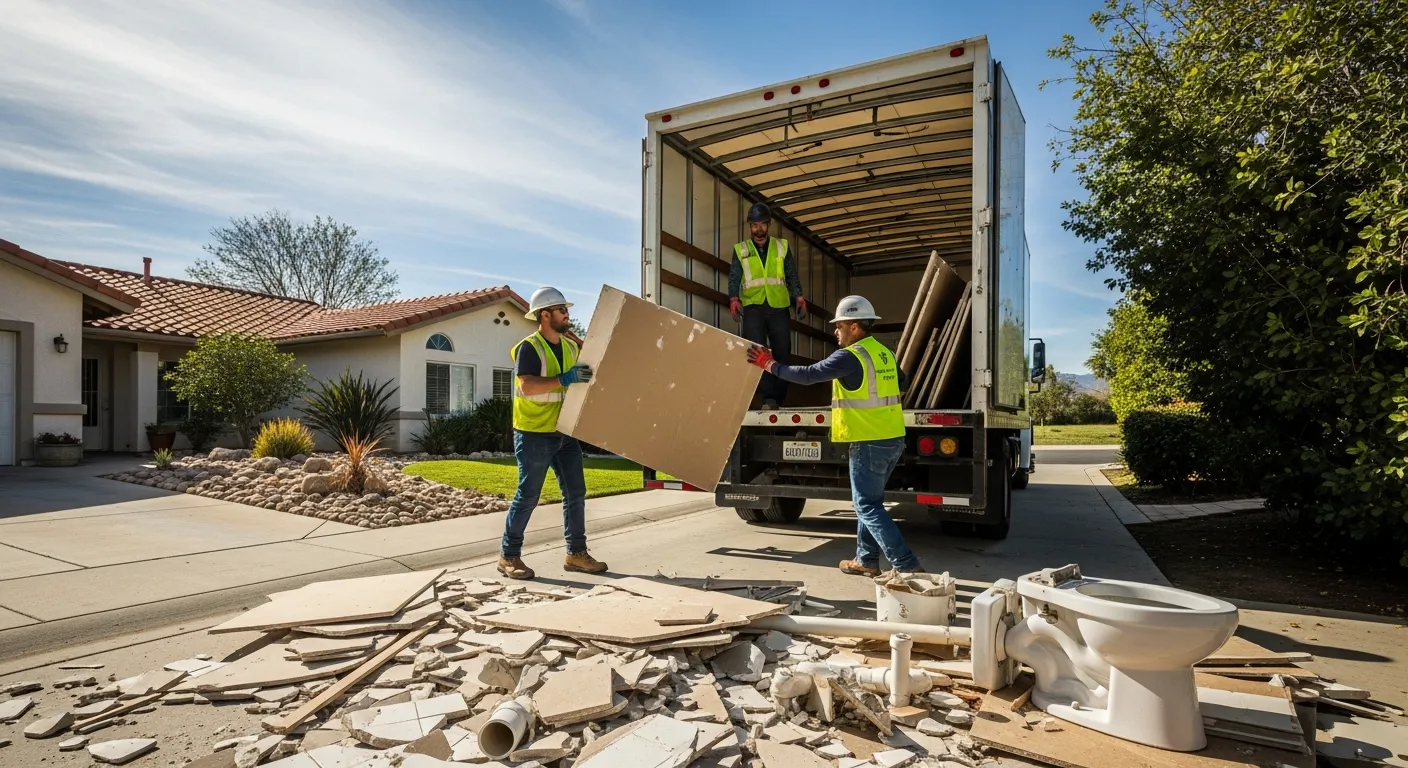
At Junk Smiths, we specialize in fast, eco-friendly construction debris removal for homeowners and bathroom demolition contractors across Orange County and Los Angeles. Here is how our process works:
Whether you are a homeowner tackling a weekend bathroom refresh or a contractor managing multiple renovation projects across Orange County, Junk Smiths has the trucks, crew, and experience to handle your demolition debris removal quickly and responsibly.
The cost to demo a bathroom ranges from $1,000 to $3,500 for labor depending on the size and complexity. Demo cost per square foot typically runs $10 to $25. A standard 50 square foot bathroom in Orange County costs between $1,500 and $4,000 total including debris removal.
A full bathroom demo takes one to three days depending on the room size, number of layers, and whether hazardous materials are present. A simple fixture swap can be done in a few hours.
Yes, many homeowners handle their own bathroom demo to save on labor costs. However, you need the right tools (pry bar, reciprocating saw, sledgehammer), proper safety gear, and a plan for debris removal. If your home was built before 1980, test for asbestos and lead paint before starting.
Essential tools include a pry bar, sledgehammer, reciprocating saw, utility knife, adjustable wrench, bucket, shop vacuum, and a wheelbarrow or heavy-duty trash bags. Safety gear should include a respirator, safety goggles, work gloves, and steel-toed boots.
A full bathroom gut produces approximately 1,000 to 2,500 pounds of debris depending on the materials. This typically fills half to a full truckload for a junk removal service or requires a 10-yard dumpster.
Bathroom demolition debris goes to a construction and demolition (C&D) landfill or recycling facility. Standard residential trash pickup does not accept renovation waste. In Orange County, the nearest C&D facilities include Frank R. Bowerman Landfill in Irvine and Olinda Alpha Landfill in Brea.
Most cities in Orange County require a building permit for bathroom renovations that involve plumbing, electrical, or structural changes. Simple cosmetic demolition (removing tile, drywall) typically does not require a permit. Check with your local city building department, as requirements vary between Huntington Beach, Irvine, Anaheim, and other OC cities.
You cannot identify asbestos by sight alone. If your home was built before 1980, hire a certified asbestos inspector to test samples of floor tiles, pipe insulation, joint compound, and textured finishes before beginning demolition. Testing costs $200 to $600 in the Orange County and LA area.





Copyright © 2024 - 2025 · Junk Smiths | Privacy Policy | Terms & Conditions