The Quickest Way to Declutter a Junk Room: A Sorting Guide
Meet The Author

Sean Smith
Table Of Contents
Let’s be honest: decluttering is rarely just about the stuff. It’s about the memories, the guilt over past purchases, and the fear of letting go of something you might need someday. Acknowledging the emotional side of this process is the first step toward making real progress. This guide respects that connection while giving you the practical tools to move forward. We’ll cover effective strategies for sorting through sentimental items and provide a clear, step-by-step plan for every room in your house. You’ll discover the quickest way to declutter a junk room, sort for recycling, donation, and disposal, without the emotional drain that usually comes with it.
Why Decluttering Your Home Is a Game-Changer
Clutter builds up slowly, and before you know it, every closet, counter, and corner of your home is packed with things you no longer need. Whether you are preparing for a move, downsizing for retirement, or simply reclaiming your living space, learning how to declutter your home room by room is the most effective way to get results without feeling overwhelmed. A structured approach keeps you focused, saves time, and helps you make better decisions about what to keep, donate, recycle, or toss.
In this guide, we walk you through a complete room-by-room decluttering plan, share practical tips for sorting your belongings, and explain how professional residential junk removal can make the entire process faster and stress-free. Whether you are tackling a single closet or an entire house, this step-by-step framework will keep you on track from start to finish.
The Emotional Side of Decluttering
Before you even start sorting, it’s important to acknowledge that decluttering is more than just a physical task—it’s an emotional one. The biggest challenge isn’t always deciding where things should go, but rather giving yourself permission to let them go in the first place. Our belongings are tied to our memories, our identities, and our hopes for the future. Recognizing this connection is the first step toward a more mindful and less stressful cleanout process. It allows you to approach your items with kindness and make decisions that feel right for you, not just your space.
Why It’s Hard to Let Go of Things
If you’ve ever stood in front of a closet packed with things you haven’t used in years and felt completely stuck, you’re not alone. Many of us struggle to part with items because of the powerful emotions they represent. It could be guilt over getting rid of a gift someone gave you, or the fear that you might need that specific item “someday.” These feelings are completely normal. The key is to understand why an item feels important. Once you identify the attachment—whether it’s to a memory, a person, or a past version of yourself—it becomes much easier to decide if the physical object is still serving you.
The Most Common Items We Cling To
While every home is different, certain categories of items consistently cause the most hesitation. These are the things that feel less like possessions and more like pieces of our personal history. Understanding why these specific items are so tough to release can help you approach them with a clear strategy and a little more self-compassion. Here are a few of the most common culprits:
- Photos: Physical photos act like tiny time machines, and getting rid of them can feel like you’re erasing the memory itself. Instead of keeping every single blurry or duplicate shot, try curating a collection of your absolute favorites. When you keep only the best, you give those special moments the attention they deserve.
- Heirloom Items: Objects passed down through generations carry the weight of family history. Parting with them can feel like you’re breaking a sacred trust. Remember that the story is more important than the stuff. Consider keeping one representative piece or passing items along to other relatives who will truly love and use them.
- Greeting Cards: A handwritten card is deeply personal, capturing a specific moment and a heartfelt message. The thought of tossing one can feel disrespectful. But if you have boxes of them, you likely never look at them. Keep a few that are truly meaningful and let go of the rest, holding onto the warm feelings they represent.
- Books: Your book collection often reflects who you are—or who you aspire to be. Letting go of unread books can feel like giving up on a goal. But books are meant for reading, not just for display. Freeing up your shelves makes room for new stories and ideas that align with who you are today.
Feeling Overwhelmed? Here’s Where to Start Decluttering
The biggest reason people stall on decluttering is not knowing where to begin. The trick is to break the project into small, manageable pieces instead of looking at the entire house as one giant task. Here is a proven system:
- Pick one room. Start with the smallest or least sentimental space. A guest bathroom or entryway closet is ideal because you can finish it in under an hour.
- Set a timer for 30 minutes. Short, focused sessions prevent burnout and keep your decision-making sharp.
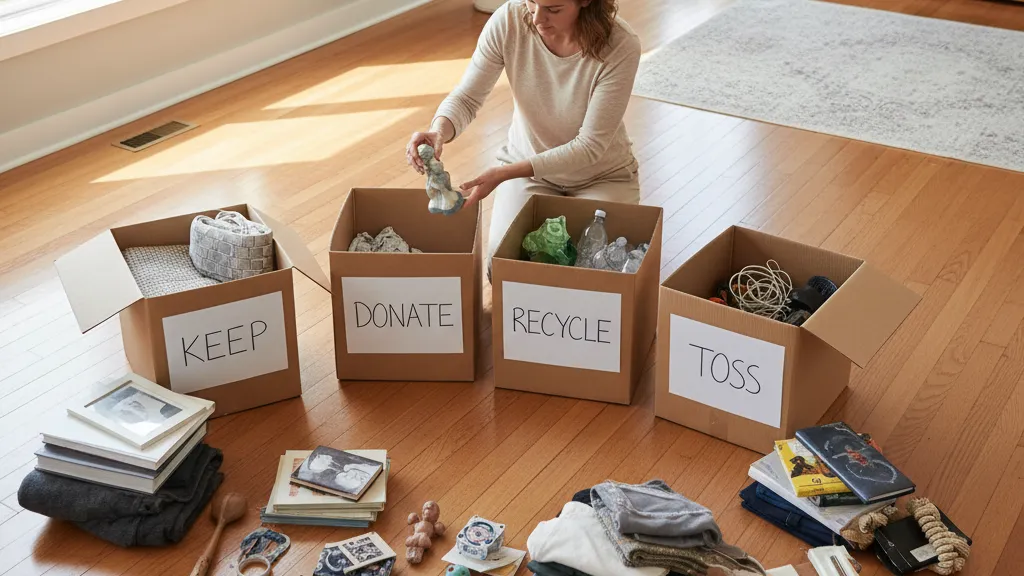
- Use the four-box method. Grab four boxes or bins and label them Keep, Donate, Recycle, and Toss. Every item you touch goes into one of these categories.
- Work in one direction. Start at the door and move clockwise around the room so you do not skip areas or double back.
- Celebrate the win. Finishing one space gives you momentum and confidence to tackle the next.
This system works whether you are decluttering a studio apartment in Huntington Beach or a five-bedroom home in Irvine. The key is consistency, not perfection.
Sort for Donation & Disposal: The Four-Box Method
Before you start tackling individual rooms, set up your sorting system. This removes the guesswork and keeps you moving forward instead of second-guessing every item:
- Keep: Items you use regularly or that hold genuine sentimental value.
- Donate: Things in good condition that someone else can use. Local charities, shelters, and thrift stores in Orange County accept furniture, clothing, and household goods. Check out our donation guidelines for details on what you can give away.
- Recycle: Paper, cardboard, glass, metal, and certain plastics belong in recycling, not the landfill. Electronics and appliances often require special e-waste recycling at approved drop-off locations.
- Toss: Broken, expired, or heavily damaged items that cannot be donated or recycled.
Having these categories set up before you start means every item you touch gets an immediate decision. No “maybe” piles allowed.
Alternative Decluttering Methods and Rules
The four-box method is a fantastic starting point, but sometimes you need a more detailed system to handle the nuances of your belongings. If you find yourself creating a “maybe” pile on the floor or getting sidetracked by items that just belong in another room, these alternative methods can provide the structure you need to keep moving forward. They introduce a few extra categories that account for the common roadblocks people face during a big cleanout, helping you make clear, confident decisions without losing momentum.
The 5-Box and 6-Box Methods for Detailed Sorting
Think of these as upgrades to the basic sorting system. The 5-Box Method builds on the original four categories by adding a crucial fifth box: “Relocate.” This simple addition is a game-changer for efficiency. For those who have valuable items they want to offload or are struggling with sentimental attachments, the 6-Box Method provides even more clarity by creating space for items you intend to sell and those you need a little more time to think about. These systems are designed to eliminate indecision and keep your workspace clear.
The “Relocate” Box
The “Relocate” box is for anything that has migrated to the wrong room—like coffee mugs in the bedroom or mail on the kitchen counter. Instead of stopping what you’re doing to put an item away, you simply place it in the Relocate box. Once you’re finished sorting the current room, you can do a single sweep of the house to return everything to its proper home. This strategy helps you stay focused on the task at hand and prevents you from creating new messes while you clean.
The “Sell” and “Maybe” Boxes
If you have items that are too valuable to donate but you no longer need, the “Sell” box is your answer. This is for things like designer clothing, electronics, or furniture that you plan to list on platforms like Facebook Marketplace or OfferUp. The “Maybe” box is a temporary holding zone for things you’re not quite ready to part with. The rule is to seal the box, date it, and store it out of sight for a few months. If you never needed anything inside, you can confidently donate or sell the entire box without reopening it.
Rules to Prevent Future Clutter
Once you’ve cleared the clutter, the next challenge is keeping it from coming back. This requires shifting your habits, not just cleaning your space. Adopting a few simple rules can transform how you interact with your belongings and prevent piles from accumulating again. These strategies aren’t about restrictive minimalism; they’re about creating sustainable systems that make tidiness the default. By integrating these small changes into your daily routine, you can maintain the peaceful, organized home you worked so hard to create.
The One-Minute Rule
This rule is as simple as it sounds: if a task takes less than a minute to complete, do it immediately. Hang up your coat instead of throwing it on a chair. Put a dish directly into the dishwasher instead of leaving it in the sink. Put the mail in its designated spot right away. These tiny actions prevent small tasks from snowballing into overwhelming messes. It’s a powerful habit that maintains order effortlessly over time, keeping your home consistently tidy with minimal effort.
The 50% Rule
When a space feels particularly overwhelming, like a packed closet or a cluttered bookshelf, the 50% Rule can be incredibly effective. The goal is to reduce the number of items in that specific area by half. This might sound drastic, but it forces you to make decisive choices about what is truly essential. It’s a straightforward and powerful method for making a significant impact quickly. By focusing on one small, contained area at a time, you can achieve a dramatic transformation without feeling overwhelmed by the entire house.
Strategies for Special Items
Some of the most difficult items to sort are those with sentimental value. Things like family heirlooms, photo albums, and personal collections carry emotional weight that makes them hard to part with, even if they’re just collecting dust in the attic. It’s completely normal to struggle with these decisions. The key is to approach these items with a different mindset, focusing on honoring the memory rather than just storing the object. This allows you to make thoughtful choices that respect your past while creating space for your present.
How to Manage Collections and Heirlooms
When dealing with collections and heirlooms, ask yourself if the item truly brings you joy or if you’re holding onto it out of guilt or obligation. It’s okay to let go of things you inherited that don’t fit your style or life. Consider keeping one or two representative pieces from a large collection and letting the rest go. You can also preserve the memory by taking a photo of the item before donating or selling it. The goal is to curate a home filled with things you love, not a storage unit for things you feel you *should* keep.
Tackle Your Home, One Room at a Time
Clearing Out the Kitchen
The kitchen tends to collect duplicate gadgets, expired pantry items, and mismatched containers. Start with these steps:
- Empty one cabinet or drawer at a time. Put everything on the counter so you can see it all.
- Toss expired food, spices older than a year, and anything with damaged packaging.
- Get rid of duplicate utensils, chipped dishes, and appliances you have not used in the past six months.
- Consolidate food storage containers and match every lid to a base. Recycle the orphans.
- Wipe down shelves before putting the keepers back, grouping similar items together.
Pro tip: If you have a junk drawer (everyone does), dump the whole thing out and be ruthless. Keep tools and essentials. Toss dried-out pens, old batteries, expired coupons, and mystery keys.
Creating a Calm Living Room
Your living room is the social hub of your home, so clutter here is especially noticeable. Focus on:
- Old magazines, catalogs, and junk mail that pile up on coffee tables and side tables.
- DVDs, CDs, and media you have already digitized or no longer watch.
- Decorative items that no longer fit your style. Less is more when it comes to surfaces.
- Throw pillows, blankets, and textiles that are worn, stained, or just taking up space.
- Furniture that crowds the room. If a piece does not serve a clear purpose, consider donating or removing it.
Large furniture items like old sofas, entertainment centers, and bookshelves are the hardest to move on your own. Need a couch or sofa removed? Our crew handles it all. If you have pieces that need to go, a professional junk removal crew can haul them out in minutes rather than the hours it would take you to wrestle them down the stairs and into a truck.
Designing a Serene Bedroom
A cluttered bedroom makes it harder to relax and sleep well. Tackle it in zones:
- Closet: Pull everything out. If you have not worn it in a year, donate it. Organize by category (shirts, pants, dresses) and season.
- Nightstands: Clear off everything except essentials like a lamp and a book. Toss old receipts, chargers for devices you no longer own, and random odds and ends.
- Under the bed: This is not storage. Remove everything, keep only what truly belongs, and invest in proper storage solutions if needed.
- Dresser tops: Limit to a few meaningful items. Everything else gets sorted into your four boxes.
Closets are typically the biggest source of bedroom clutter. The average American household has about 300,000 items, and a large percentage of those live in closets. Donate gently used clothing to organizations like the Salvation Army or Goodwill locations throughout Orange County.
Simplifying the Bathroom
Bathrooms are small, but they accumulate clutter fast:
- Check expiration dates on medications, sunscreen, and skincare products. Expired items go in the toss bin.
- Get rid of sample-size toiletries, half-used products, and beauty tools you never reach for.
- Old towels and washcloths can be donated to local animal shelters in Orange County, including the Orange County SPCA and local rescue organizations.
- Consolidate cleaning supplies under the sink and recycle empty bottles.
Organizing Your Home Office for Focus
Home offices collect paper faster than any other room. Between old tax documents, outdated manuals, and stacks of notes you will never reference again, the clutter multiplies quickly. Here is how to regain control:
- Paper: Shred anything with personal information that is older than seven years (the IRS retention guideline). Scan important documents you want to keep digitally, then recycle the originals.
- Electronics: Old laptops, tangled cables, dead printers, and outdated phones do not belong on your desk. Take them to an e-waste recycling center. Orange County has free drop-off locations in Huntington Beach, Anaheim, and Irvine.
- Office supplies: Consolidate pens, notepads, and sticky notes. Toss anything dried out or broken. If you have more supplies than one drawer can hold, you have too many.
- Books and manuals: Keep references you actually use. Donate the rest to your local library or a Little Free Library in your neighborhood.
- Desktop and drawers: Apply the same “clear everything, then put back only what you need” approach you used in the kitchen.
Reclaiming Your Garage from Clutter
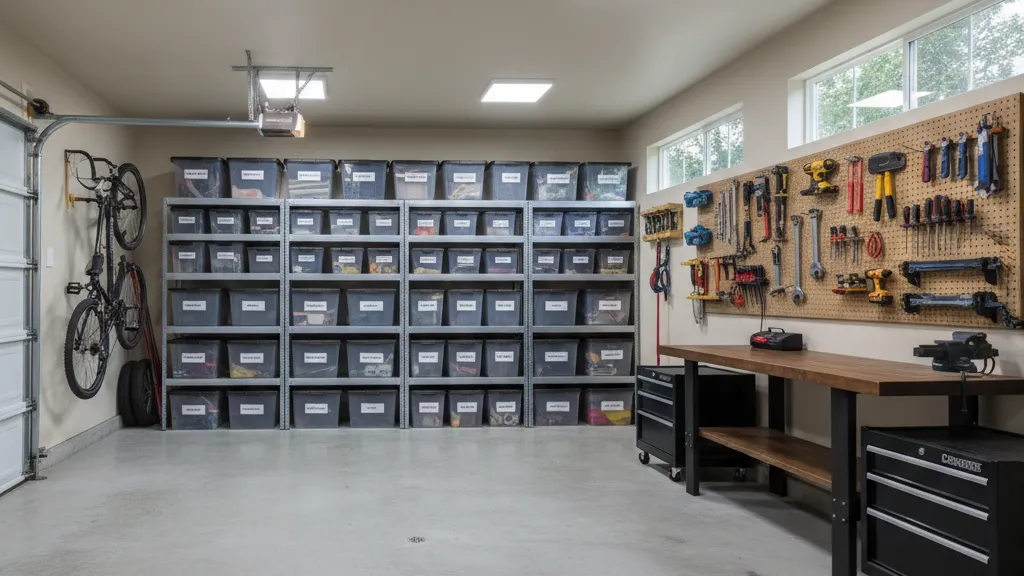
The garage is often the most overwhelming room to declutter because it becomes a catch-all for everything that does not have a home inside. Our complete garage cleanout guide breaks this down in detail, but here are the essentials:
- Sort items into zones: tools, sports equipment, seasonal decorations, automotive supplies.
- Get rid of broken tools, dried-out paint cans, and chemicals you no longer need. Dispose of hazardous materials at an approved Orange County Household Hazardous Waste Collection Center.
- Donate sports gear and outdoor equipment your family has outgrown.
- If you have large items like old furniture, appliances, or construction debris taking up space, professional junk removal is the fastest way to clear it all out.
Sorting Through the Attic and Storage Spaces
If you have not opened a box since you moved in, you probably do not need what is inside. Apply these rules:
- Open every box and evaluate the contents. Label anything you decide to keep.
- Donate holiday decorations, old clothing, and keepsakes that no longer hold meaning.
- Recycle old documents after scanning anything important.
- Watch for items damaged by heat, moisture, or pests. These go straight to the toss pile.
DIY Decluttering vs. Hiring a Pro: Which Is Right for You?
Some homeowners prefer to handle everything themselves, while others want the speed and convenience of professional help. Here is how the two approaches compare:
| Factor | DIY Decluttering | Professional Junk Removal |
|---|---|---|
| Time Investment | High: days or weeks depending on home size | Low: most jobs finished in 1 to 3 hours |
| Physical Effort | Heavy lifting required for furniture and appliances | Zero effort: the crew handles all loading |
| Cost | Low (supplies and dump fees only) | Moderate (volume-based flat rate, no hidden fees) |
| Disposal and Recycling | You must transport items to the dump or recycling center yourself | Included: eco-friendly sorting, donation, and recycling |
| Convenience | Multiple trips to donation centers and the landfill | One appointment handles everything |
| Best For | Small projects with light items | Large cleanouts, heavy items, or tight deadlines |
The best approach for most families is a hybrid: you do the sorting and decision-making (nobody else can decide what you want to keep), then call a junk removal company like Junk Smiths to haul everything away. You save money on the sorting phase and save your back on the hauling phase.
Where to Donate & Recycle Your Items in Orange County
Knowing where your unwanted items will end up makes letting go easier. Here are local options for Orange County residents:
- Goodwill of Orange County: Accepts clothing, furniture, electronics, and household goods at multiple locations including Huntington Beach, Costa Mesa, and Fullerton.
- Salvation Army: Offers free pickup for large donations like furniture and appliances.
- Habitat for Humanity ReStore: Accepts building materials, appliances, and home improvement items in good condition.
- Orange County Rescue Mission: Accepts clothing, furniture, and household items to support families in need.
- E-waste recycling: The County of Orange operates Household Hazardous Waste Collection Centers where you can drop off electronics, batteries, paint, and chemicals at no cost.
- Textile recycling: Worn-out clothing and linens that are not suitable for donation can go into textile recycling bins found at many Orange County shopping centers.
When you hire Junk Smiths, we sort your items for you and route reusable goods to local donation centers. Our eco-friendly approach prioritizes recycling and donation over the landfill.
How to Declutter for Big Life Changes
Moving
Decluttering before a move saves time, reduces moving costs, and helps you start fresh in your new space. The fewer items you pack, the less you pay for boxes, truck space, and labor. Our guide on decluttering before moving covers this in detail, including timelines and checklists to keep you on track.
Downsizing for a New Chapter
Downsizing is common for seniors, retirees, and empty nesters transitioning to a smaller home. The key is to measure your new space and decide what fits before you move. Prioritize items you use daily and let go of duplicates, oversized furniture, and collections that will not have room in a smaller layout.
Your Annual Spring Cleanout
Spring cleaning is a natural reset. Pair your annual deep clean with a decluttering session to prevent junk from piling up year after year. Our spring cleaning checklist gives you a structured plan for every room so nothing gets missed.
My Favorite Decluttering Tips (That Actually Work)
These practical decluttering tips keep the momentum going, whether you are tackling one room or the entire house:
- Set a timer. Work in focused 30-minute blocks. Short bursts prevent burnout and keep you making decisions quickly.
- Start with the easiest room. A quick win builds confidence. The bathroom or a guest bedroom is usually the fastest to clear.
- Use the one-year rule. If you have not used it, worn it, or thought about it in a year, it is time to let it go.
- Do not buy organizing products first. Declutter before you organize. You will need fewer bins and baskets than you think.
- Take photos of sentimental items. You can keep the memory without keeping the physical object.
- Enlist help. A friend, family member, or professional junk removal crew can keep you accountable and handle the heavy lifting.
- One in, one out. After your declutter, maintain the results by committing to removing one item every time you bring a new one home.
The Quickest Way to Declutter: Professional Junk Removal
Sorting and deciding what to keep is the hardest part. Hauling everything away should not be. That is where Junk Smiths comes in. As a family-owned junk removal company based in Huntington Beach, we serve homeowners and businesses across Orange County and Los Angeles with fast, eco-friendly junk removal. Here is how we help:
- Same-day pickup: We work on your schedule, including weekends and after hours.
- We do the heavy lifting: Our crew loads everything from furniture and appliances to boxes and yard debris.
- Eco-friendly disposal: We donate reusable items to local charities and recycle as much as possible. Keeping junk out of the landfill is a priority.
- Volume-based pricing: You only pay for the space your items take up in our truck. No hidden fees, no surprises.
- Licensed and insured: You get peace of mind knowing your property is protected.
Instead of making multiple trips to the dump or trying to fit oversized items in your car, one call to Junk Smiths handles it all. You declutter, we haul. Get your free estimate here.
Frequently Asked Questions
What’s the first step when you’re overwhelmed by clutter?
Pick one room, preferably the smallest or easiest, and set a 30-minute timer. Focus only on that space. Starting small builds momentum and makes the bigger rooms feel less daunting.
Which room should I tackle first?
Most people find the bathroom or a guest bedroom the fastest to clear because they contain fewer sentimental items. A quick win early on motivates you to keep going.
How do I choose what to keep vs. toss?
Use the one-year rule: if you have not used, worn, or needed the item in the past 12 months, it is time to let it go. Exceptions include seasonal items, important documents, and irreplaceable keepsakes.
What are the best places to donate in Orange County?
Goodwill, Salvation Army, Habitat for Humanity ReStore, and the Orange County Rescue Mission all accept household goods, clothing, and furniture. For large donations, the Salvation Army offers free pickup. Junk Smiths also donates usable items on your behalf when we haul them away.
What’s a realistic timeline for decluttering a house?
A typical three-bedroom home takes most people one to two weekends working a few hours each day. Larger homes or heavy accumulation may take longer. Hiring a junk removal team to handle the haul-away saves significant time.
Are there items I can’t just throw away?
Hazardous materials like paint, batteries, electronics, fluorescent bulbs, and chemicals require special disposal. Orange County operates Household Hazardous Waste Collection Centers for these items. Never put them in your curbside bin.
Can a junk removal service help with my decluttering project?
Absolutely. We pick up furniture, appliances, electronics, yard waste, construction debris, and general household junk anywhere in Orange County and Los Angeles. Just point to what goes and we take care of the rest. Book your free estimate here or call us at 714-369-8886.
What’s the average cost for junk removal?
Pricing is based on the volume of items, not the number of hours. A small load (a few bags and boxes) typically costs less than a full truckload of furniture and appliances. Junk Smiths provides free, no-obligation estimates so you know the price before we start.
Key Takeaways
- Separate emotion from action with a system: Acknowledge that it’s hard to let go of sentimental items, then use a structured sorting method like the four-box system (Keep, Donate, Recycle, Toss) to make clear, logical decisions.
- Start small to prevent overwhelm: The best way to tackle a huge project is to break it down. Begin with one small area, like a single drawer or cabinet, and set a timer for 30 minutes to make quick progress without burning out.
- Focus your energy on sorting, not hauling: Your most important job is deciding what to keep. Once you have your piles sorted, let a professional service handle the heavy lifting, donation drop-offs, and proper disposal of everything else.