
How to Dispose of Paint: The Ultimate OC Guide
Meet The Author

Sean Smith
Table Of Contents
That weekend garage cleanout always starts with good intentions. But behind the old bikes and holiday decorations, you find them: a stack of half-used, crusty paint cans from a project you barely remember. Your first instinct might be to haul them to the curb with the rest of the trash, but in California, that’s a costly mistake. Improperly discarding paint can lead to serious fines. The good news is that getting rid of it correctly is easier than you think. This guide breaks down exactly how to dispose of paint in Orange County, covering the free drop-off programs, what to do with different paint types, and when to call for help.
Getting Rid of Old Paint in Orange County? Here’s How
Whether you just finished a home renovation or found old cans stacked in your garage, disposing of paint properly in Orange County is not as simple as tossing it in the trash. California law prohibits throwing liquid paint in household garbage, and improper disposal can result in fines up to $25,000 per violation.
Need paint cans hauled away today? Junk Smiths offers same-day paint and hazardous waste removal across Orange County. Book your free estimate or call (714) 369-8886.
This guide covers everything Orange County homeowners need to know: where to drop off paint for free, how to handle latex versus oil-based paint, California disposal regulations, the PaintCare recycling program, and when professional junk removal is the smartest option.
Know the Rules: California’s Paint Disposal Laws
California classifies oil-based paint, spray paint, and paint thinners as household hazardous waste (HHW). Disposing of these materials in regular trash, down the drain, or on the ground is illegal under the California Health and Safety Code (Sections 25117-25250).
Here is what you need to know about California paint disposal laws:
- Latex (water-based) paint is not classified as hazardous waste in California. However, you still cannot throw liquid latex paint in the trash. It must be dried out completely before disposal or taken to a collection center.
- Oil-based paint, stains, and varnishes are hazardous waste and must be taken to a certified HHW collection facility.
- Spray paint cans are considered hazardous due to pressurized aerosol and chemical propellants.
- Paint thinners, strippers, and solvents are hazardous and require proper HHW disposal.
- Fines for illegal dumping range from $1,000 for a first offense to $25,000 or more for repeat violations, plus potential criminal charges.
The good news: Orange County makes it relatively easy to dispose of paint for free through multiple drop-off programs and collection events.
California’s Official Stance on Paint Disposal
California takes paint disposal seriously, classifying oil-based paints, spray paints, and paint thinners as household hazardous waste (HHW). According to the California Health and Safety Code, it is illegal to dispose of these materials in your regular trash, pour them down the drain, or dump them on the ground. Violating these regulations can lead to significant penalties. Fines for improper disposal can range from $1,000 for a first offense to $25,000 or more for repeat violations, along with potential criminal charges. For property managers and real estate agents, ensuring compliance is key to avoiding liability.
When it comes to latex (water-based) paint, the rules are slightly different. While it isn’t classified as hazardous waste, you still cannot throw liquid latex paint in the trash. Homeowners must ensure it is completely dried out before disposal or take it to a designated collection center. Oil-based paints, stains, and varnishes, on the other hand, are always considered hazardous and must be taken to a certified HHW collection facility. Additionally, spray paint cans are deemed hazardous due to their pressurized aerosol and chemical propellants, so they require the same careful handling as other HHW.
Fortunately, you don’t have to figure this out alone. To make responsible disposal easier, California offers several helpful programs. The most prominent is the PaintCare recycling initiative, which allows residents to drop off unwanted paint for free at hundreds of designated locations across the state. This program is funded by a small fee added to the price of new paint purchases, making it a convenient and accessible option for homeowners and businesses looking to clear out old paint cans the right way.
Where to Dispose of Paint for Free in Orange County
Orange County residents have several free options for disposing of both latex and oil-based paint:
Using OC’s Household Hazardous Waste Centers
Orange County operates four permanent Household Hazardous Waste collection centers where residents can drop off paint for free:
| Location | Address | Hours |
|---|---|---|
| Anaheim Collection Center | 1071 N. Blue Gum St., Anaheim, CA 92806 | Tue-Sat, 9 AM to 3 PM |
| Huntington Beach Collection Center | 17121 Nichols Ln., Huntington Beach, CA 92647 | Tue-Sat, 9 AM to 3 PM |
| Irvine Collection Center | 6411 Oak Canyon, Irvine, CA 92618 | Tue-Sat, 9 AM to 3 PM |
| San Juan Capistrano Collection Center | 32250 La Pata Ave., San Juan Capistrano, CA 92675 | Tue-Sat, 9 AM to 3 PM |
What to bring: Valid California driver’s license or utility bill proving OC residency. Limit of 15 gallons of paint per visit. Paint must be in original or labeled containers.
Finding a Local PaintCare Drop-Off Site
The PaintCare program is California’s paint stewardship initiative funded by a small fee included in the price of new paint. PaintCare accepts latex paint, oil-based paint, stains, and varnishes at hundreds of drop-off locations statewide, including many hardware and paint stores in Orange County:
- Dunn-Edwards locations throughout Orange County
- Kelly-Moore Paints stores
- Sherwin-Williams locations (check individual store participation)
- Selected Home Depot and Lowe’s stores (varies by location)
Visit paintcare.org to find the nearest drop-off site. PaintCare sites typically accept up to 5 gallons per visit with no appointment needed.
How the PaintCare Program Works
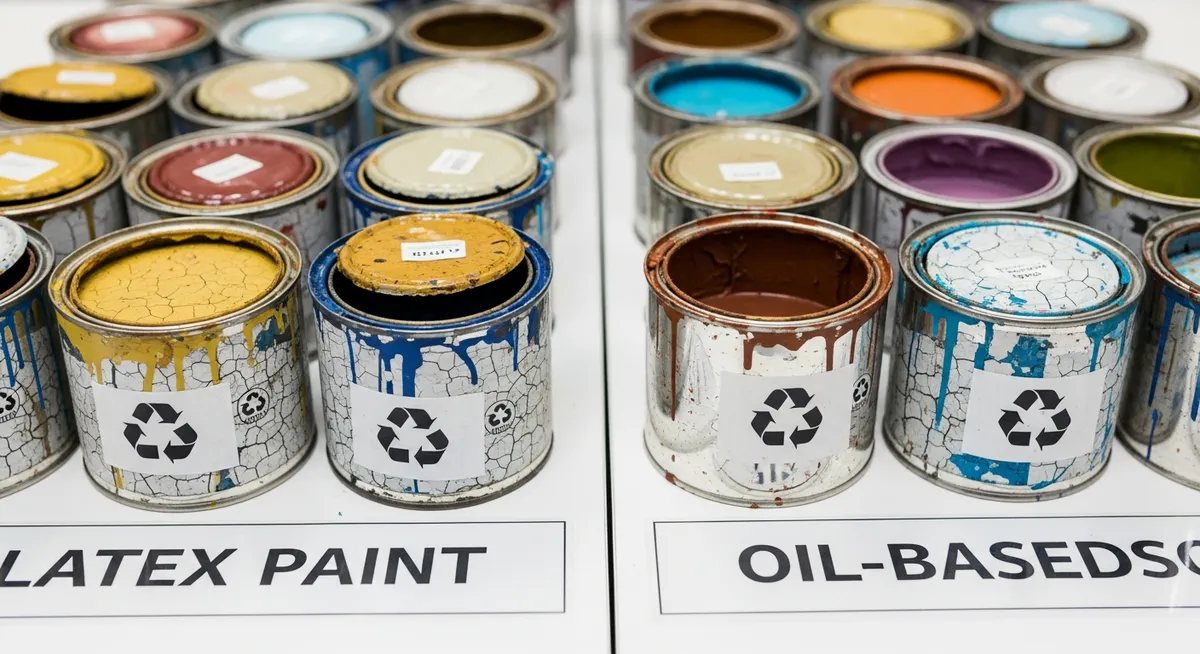
Think of PaintCare as a statewide recycling program just for paint. It’s a California stewardship initiative funded by a small fee you already pay when you buy new paint, making it a convenient and pre-paid service. This program makes it incredibly easy to get rid of old latex paint, oil-based paint, stains, and varnishes. Instead of letting them take up space in your garage or risking improper disposal, you can drop them off at hundreds of participating locations across the state, including many local hardware and paint stores. This system keeps paint out of landfills and ensures the materials are handled responsibly, which is a huge win for our local environment.
What to Know Before You Go
Before you load up your car, a little planning goes a long way. The easiest way to find a drop-off location is to visit the PaintCare website and search for a site near you in Orange County. Most retail stores and other drop-off points accept up to 5 gallons per visit, and you usually don’t need an appointment, which is great for a spontaneous garage cleanout. Just make sure your paint cans are in their original containers with the labels intact and are sealed securely to prevent any leaks during transport. This makes the process smooth and simple for everyone involved.
Free Large Volume Pickups
If you’re a property manager, contractor, or homeowner with a massive amount of old paint, PaintCare has a fantastic solution. For quantities of 100 gallons or more, the program offers a completely free pickup service directly from your home or business. This is a game-changer for large-scale cleanouts, post-renovation debris, or clearing out a commercial space. It saves you the hassle of making multiple trips to a drop-off site and ensures that a large volume of paint is managed correctly from the start. You can schedule this service directly through the PaintCare website.
The PaintCare Reuse Program
One of the best parts of the PaintCare program is its focus on reuse. Some drop-off locations have a “Reuse Program” where they set aside good-quality leftover paint for others to take for free or at a very low cost. This is an amazing resource for community groups, artists, or anyone on a budget who needs paint for a small project. It gives perfectly good paint a second life, reducing waste and helping others in the community. When you drop off your paint, it’s always worth asking if the location participates in the reuse program—you might be helping your neighbor finish their next DIY project.
Latex vs. Oil-Based Paint: What’s the Disposal Difference?
The disposal method depends entirely on what type of paint you have. Here is a comparison:
| Factor | Latex (Water-Based) Paint | Oil-Based Paint |
|---|---|---|
| Hazardous? | No | Yes |
| Trash disposal allowed? | Only when fully dried | Never |
| Can pour down drain? | No (clogs pipes) | No (illegal, contaminates water) |
| HHW center required? | Optional (preferred) | Yes (required) |
| PaintCare accepted? | Yes | Yes |
| DIY drying method? | Yes (cat litter or newspaper) | Not recommended |
| Cost of professional removal | $25 to $50 per load | $50 to $100+ per load |
| Environmental risk if dumped | Moderate (waterway contamination) | High (soil and groundwater contamination) |
A Simple Way to Dry Latex Paint for Disposal
If you have small amounts of latex paint (less than half a gallon), you can dry it out and dispose of it in regular trash:
- Remove the lid and let thin layers dry in a well-ventilated area away from children and pets
- Speed up drying by mixing in cat litter, sawdust, or shredded newspaper (1:1 ratio)
- Wait 24 to 48 hours until the paint is completely solid with no liquid remaining
- Leave the lid off so your waste hauler can verify the paint is dried
- Place the can in your regular trash on collection day
For larger quantities (more than half a gallon), take the paint to an HHW center or PaintCare site instead. Drying large amounts is impractical and messy.
Have a garage full of old paint cans? Junk Smiths picks up and properly disposes of paint, stains, and other household chemicals. Call (714) 369-8886 for a free quote.
What Happens to Your Old Paint After Drop-Off?
When you take the time to drop off old paint at a proper collection site, you’re doing more than just following the law—you’re participating in a powerful recycling loop. Instead of ending up in a landfill where it can leach harmful chemicals into the soil and groundwater, your leftover paint is given a new purpose. California has a robust system for managing paint waste, ensuring that the materials are handled responsibly. The journey for each can of paint varies depending on its type and condition, but the end goal is always to recover its value and minimize environmental impact. It’s a process that turns potential waste into a useful resource.
Recycled into New Products
Most of the latex paint collected in Orange County is destined for recycling. Usable paint is sorted by color, filtered to remove debris, and then re-blended with other paints to create new, recycled-content paint that is sold to consumers. This process conserves resources and reduces the need for new raw materials. According to CalRecycle, paint is highly recyclable and can also be used to make other products. For paint that isn’t suitable for re-blending, it can be repurposed as an additive in cement manufacturing or used to create materials like retaining wall blocks and landscape stones, ensuring very little goes to waste.
Reused or Converted to Energy
Not all paint goes straight to the recycling facility. Many HHW centers and PaintCare locations have reuse programs where they offer good-quality, leftover paint to the public for free. This is a fantastic option for community projects or small touch-ups. For oil-based paints and stains that can’t be reused, the disposal path is different. Because of their chemical makeup, these paints are often sent to a special facility where they are burned for energy in a controlled industrial setting. This process, known as energy recovery, captures the fuel value of the paint, using it to generate power for cement kilns or other manufacturing operations. It’s a safe and effective way to manage hazardous material while recovering its value.
Should You DIY or Hire a Pro to Dispose of Paint?
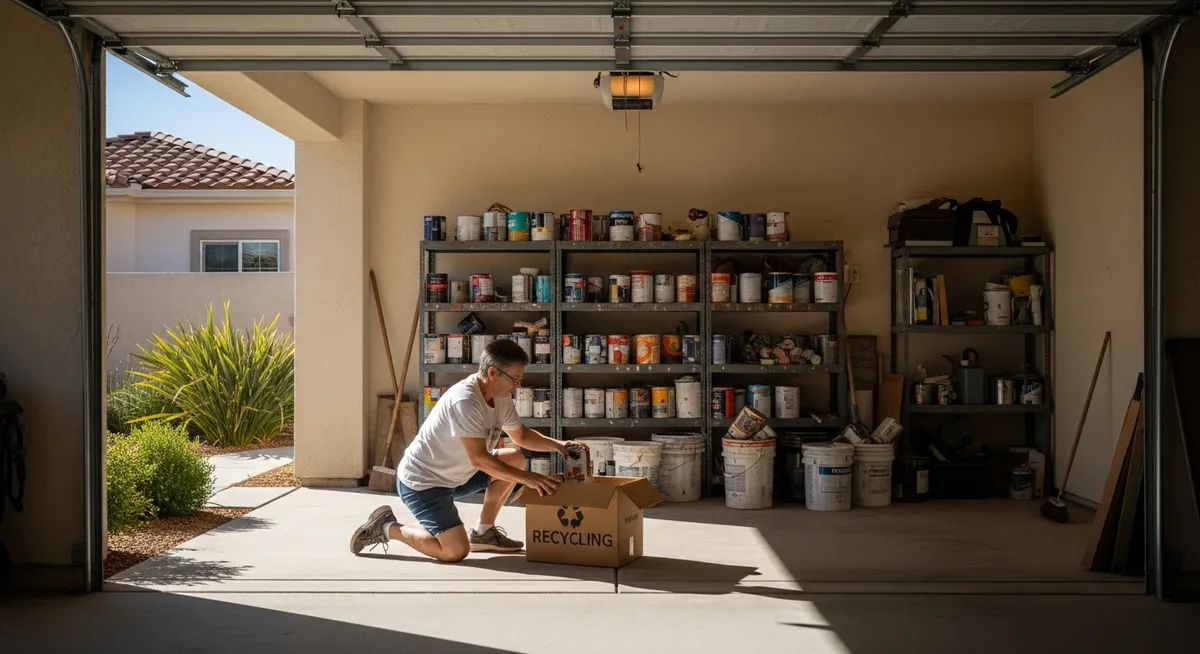
For a few cans, DIY disposal works fine. But when you are dealing with a garage cleanout, renovation project, or estate cleanout with dozens of cans, professional removal saves significant time and hassle.
| Factor | DIY Disposal | Professional Removal (Junk Smiths) |
|---|---|---|
| Best for | 1 to 5 cans | 6+ cans or mixed waste |
| Cost | Free (your time) | Starting at $99 for a small load |
| Time required | 1 to 3 hours (driving, waiting) | 15 minutes (we load and haul) |
| Handles oil-based paint? | Must take to HHW center | Yes, we handle all types |
| Handles other junk? | No | Yes, we take everything in one trip |
| Pickup from home? | No (you drive to drop-off) | Yes, same-day pickup available |
| Proper disposal guaranteed? | If you follow guidelines | Yes, fully licensed and insured |
| Physical effort | Loading, driving, unloading | Zero, we do all the heavy lifting |
| Weekend availability | HHW hours only (Tue-Sat) | 7 days a week |
| Can combine with other cleanout? | No | Yes, one trip for paint plus furniture, debris, etc. |
Considerations for Businesses and Contractors
For contractors, property managers, and real estate agents, the rules for paint disposal are stricter. While homeowners can easily use free drop-off sites, businesses are subject to regulations based on the volume of hazardous waste they generate. The PaintCare program, for instance, only allows businesses to drop off oil-based paint if they qualify as a Conditionally Exempt Small Quantity Generator (CESQG). This federal rule means your business must generate less than 100 kilograms (about 25 gallons) of hazardous waste per month and accumulate no more than 1,000 kilograms at any time. Exceeding these limits means you need a different, compliant disposal solution for oil-based paints, stains, and solvents.
Failing to follow these commercial disposal laws can lead to significant fines, starting at $1,000 and reaching over $25,000 for repeat offenses. For busy professionals managing job sites or property turnovers, navigating these rules is an unnecessary hassle. This is where a professional service becomes essential. Junk Smiths specializes in commercial junk removal, providing a fully licensed and insured solution for contractors and businesses. We handle the proper disposal of paint, construction debris, and other materials, ensuring you remain compliant without sacrificing time or efficiency. We manage the logistics so you can focus on your project, not on hazardous waste regulations.
What to Expect from a Professional Paint Disposal Service
When you hire Junk Smiths for paint removal, the process is straightforward:
- Book online or call (714) 369-8886 to schedule your pickup
- We arrive at your location with a fully equipped truck and trained crew
- Point to what needs to go and we handle all the loading, including paint cans, stains, thinners, and any other junk
- We sort and dispose responsibly using licensed facilities. Reusable paint is donated, latex paint is recycled through PaintCare, and hazardous materials go to certified HHW facilities
- Your space is clean and you have a receipt for your records
This is especially valuable during spring cleaning, garage cleanouts, or when you are downsizing your home and need to clear out years of accumulated paint and chemicals.
How to Dispose of Aerosol Spray Paint Cans
Aerosol spray paint cans require special handling because they contain pressurized propellants:
- Empty spray cans (no liquid or pressure remaining) can go in your regular recycling bin with other metal cans in most Orange County cities
- Partially full spray cans are hazardous waste and must go to an HHW collection center
- Never puncture a pressurized spray paint can. This is dangerous and releases harmful chemicals
- PaintCare does not accept aerosol cans. These must go through HHW facilities
Future Changes to Aerosol Paint Recycling
Getting rid of old spray paint cans can feel like a separate chore. Because they contain pressurized propellants, they’re treated as household hazardous waste and can’t be dropped off at PaintCare sites with your other paint. This often means a separate trip to an HHW facility is necessary for just a few cans, an extra step that can make a garage cleanout feel more complicated than it needs to be. Thankfully, good news is on the horizon. California is updating its paint recycling program to make things simpler. Under the state’s Paint Stewardship Program, collection sites will be required to accept aerosol spray paints by January 1, 2028, or possibly sooner. This change will streamline the process, allowing you to take both your liquid paint and spray cans to the same convenient drop-off locations. Until then, just remember to take any partially full aerosol cans to a designated HHW facility.
Smart Tips for Easier Paint Disposal
Follow these tips to make paint disposal easier and more cost-effective:
- Buy only what you need. Use online paint calculators to estimate how much paint your project requires. Less leftover paint means less to dispose of.
- Store paint properly. Keep cans sealed tightly in a temperature-controlled area. Properly stored latex paint lasts up to 10 years; oil-based paint lasts up to 15 years.
- Donate usable paint. Habitat for Humanity ReStores, community theaters, schools, and churches often accept gently used paint. Check with your local Orange County donation centers first.
- Consolidate cans. Pour similar colors into one can to reduce the number of containers you need to dispose of.
- Bundle with other junk. If you are already scheduling a bulk trash pickup or junk removal appointment, add the paint cans to the same load.
Tip 1: Calculate Your Needs to Reduce Waste
The easiest way to deal with leftover paint is to not have any in the first place. Before starting a project, take a few minutes to measure your space and use an online paint calculator to get a surprisingly accurate estimate of how much you’ll need. Buying only what you need saves you money upfront and prevents the inevitable pile-up of half-used cans in the garage. This simple step is the most effective way to reduce waste and avoid the hassle of disposal later. It turns a future cleanup problem into a non-issue, keeping your storage space clear and your project on budget.
Tip 2: Donate Usable Leftover Paint
If you have at least a half-can of good, usable paint left, consider giving it a second life. Many local organizations can put it to great use. Non-profits like Habitat for Humanity ReStores often accept paint donations for their building projects and retail stores. You can also reach out to local community theaters, school art departments, or churches to see if they need paint for sets or maintenance. Always call ahead to confirm they are accepting donations and to check what types and quantities they need. It’s a fantastic, eco-friendly way to clear out your clutter while supporting your community.
Tip 3: Properly Clean Your Tools
Proper disposal isn’t just about the can; it’s also about the cleanup. How you clean your brushes and rollers matters, especially in California. For latex paint, you can use soap and water, but never wash your tools where the runoff can enter a storm drain. For oil-based paints and stains, you’ll need to use solvents. According to CalRecycle, this rinse water is considered hazardous waste and should never be poured on the ground or down the drain. Collect the contaminated solvent in a sealed, labeled container and take it to a household hazardous waste facility along with your old paint cans.
Frequently Asked Questions
Can I just throw old paint in the trash?
You can throw latex (water-based) paint in the trash only if it is completely dried and solidified. Oil-based paint, stains, and solvents cannot go in the trash under any circumstances. They must be taken to a Household Hazardous Waste facility.
Where are the free paint drop-off locations?
Orange County has four free HHW collection centers in Anaheim, Huntington Beach, Irvine, and San Juan Capistrano. You can also drop off paint at PaintCare partner stores like Dunn-Edwards and Kelly-Moore for free.
What’s the best way to dry out leftover paint?
Mix the paint with an equal amount of cat litter, sawdust, or shredded newspaper. Leave the lid off in a well-ventilated area for 24 to 48 hours until completely solid. Then place the open can in your regular trash.
Why shouldn’t I dry out paint for disposal?
While drying out the last bit of latex paint is an option, it’s often not the best one. The process is messy—mixing cat litter or sawdust into paint can easily lead to spills. It’s also only practical for very small amounts, like less than half a can. If you’re dealing with multiple cans from a renovation or a garage cleanout, trying to dry them all out is incredibly inefficient and time-consuming. For anything more than a gallon, taking the paint to a drop-off center is a much cleaner and faster solution.
More importantly, the drying method only applies to water-based latex paint. It is illegal to dispose of oil-based paint, stains, and spray paint in your regular trash, regardless of whether they are dry. California law classifies these materials as household hazardous waste (HHW), which must be handled by a certified facility to prevent environmental contamination. Attempting to dry and toss them can lead to fines and poses a risk to sanitation workers and the environment. When in doubt, it’s always safer and legally compliant to use a designated drop-off program or a professional service.
Is latex paint considered hazardous waste in California?
No. In California, latex (water-based) paint is not classified as hazardous waste. However, you still cannot throw liquid latex paint in the trash. It must be dried out or taken to a collection center.
What’s the cost for professional paint removal?
Professional paint removal starts at approximately $99 for a small load (a few cans mixed with other junk). For a full garage cleanout with paint and other items, expect $200 to $500 depending on volume. Junk Smiths provides free, no-obligation quotes.
Is it okay to pour latex paint down the drain?
No. While latex paint is water-based, pouring it down the drain can clog pipes and contaminate water treatment systems. Always dry it out or take it to a collection center.
What is the PaintCare recycling program?
PaintCare is California’s paint stewardship program funded by a small fee included in new paint purchases. It provides free drop-off locations at participating paint and hardware stores where you can recycle leftover paint, stains, and varnishes.
What’s the paint drop-off limit at HHW centers?
OC Waste and Recycling allows up to 15 gallons per visit at their four permanent collection centers. You will need a valid California ID or utility bill showing Orange County residency.
Key Takeaways
- Know Your Paint to Stay Compliant: To avoid fines, understand the key difference in disposal rules: oil-based paints and aerosols are hazardous waste that must go to a certified facility, while latex paint can only go in the trash after it has been completely dried out.
- Use Orange County’s Free Drop-Off Programs: You can dispose of old paint at no cost. Simply take your unwanted cans to one of the county’s four Household Hazardous Waste centers or find a participating PaintCare retail store near you for a quick and easy drop-off.
- Hire a Pro for Large or Mixed Cleanouts: If you have more than a few cans or are clearing out other junk at the same time, a professional service is your most efficient option. It saves you the trip and guarantees all materials, hazardous or not, are handled correctly.
Related Articles
- How to Dispose of Paint in Orange County (2026)
- How to Dispose of Paint Safely in Orange County
- Concrete Disposal in Orange County: Recycling and Dump Guide
- Orange County Waste Rules & Disposal Tips
- Orange County’s Recycling Regulations