
How to Get Rid of an Old Refrigerator in OC
Meet The Author

Sean Smith
Table Of Contents
That old refrigerator humming away in the garage is costing you more than just space. Outdated appliances are notoriously inefficient, potentially adding over a hundred dollars to your annual energy bill. When you factor in the risk of hefty fines for improper disposal, the question of how to get rid of an old refrigerator becomes a financial one. You could try to sell it, find a rebate program, or haul it yourself. This guide weighs the costs and benefits of each disposal method in Orange County, helping you make the smartest choice for your wallet and your peace of mind.
How to Get Rid of Your Old Refrigerator in Orange County
Getting rid of an old refrigerator is not as simple as rolling it to the curb. Refrigerators contain hazardous refrigerants (like Freon), oils, and foam insulation that require specialized handling under federal and California law. Dumping a refrigerator illegally can result in fines up to $10,000 and criminal penalties under the Clean Air Act.
Need a refrigerator hauled away today? Junk Smiths handles refrigerator disposal safely and legally across Orange County. Book your free estimate or call (714) 369-8886.
This guide explains your options for disposing of a refrigerator in Orange County: from retailer take-back programs and utility rebates to professional junk removal. We cover California disposal laws, what makes refrigerators hazardous, costs for each option, and how to choose the best method for your situation.
What About Mini-Fridges and Freezers?
Don’t let their small size fool you—mini-fridges and chest freezers are subject to the same disposal regulations as full-sized models. They contain refrigerants and oils that require special handling to prevent environmental pollution, so they can’t just be left on the curb. If your unit still works, donating it is a fantastic option. Local charities, shelters, or even college students are often in need of a working mini-fridge. If you’re buying a replacement, check if the retailer offers a take-back program. Before you do anything, make sure to remove the door completely. This is a critical safety step that prevents children from accidentally getting trapped inside. Of course, for a simple, one-stop solution, the team at Junk Smiths can handle the entire process for you, ensuring your old appliance is recycled correctly.
Why Can’t I Just Throw My Old Fridge Away?
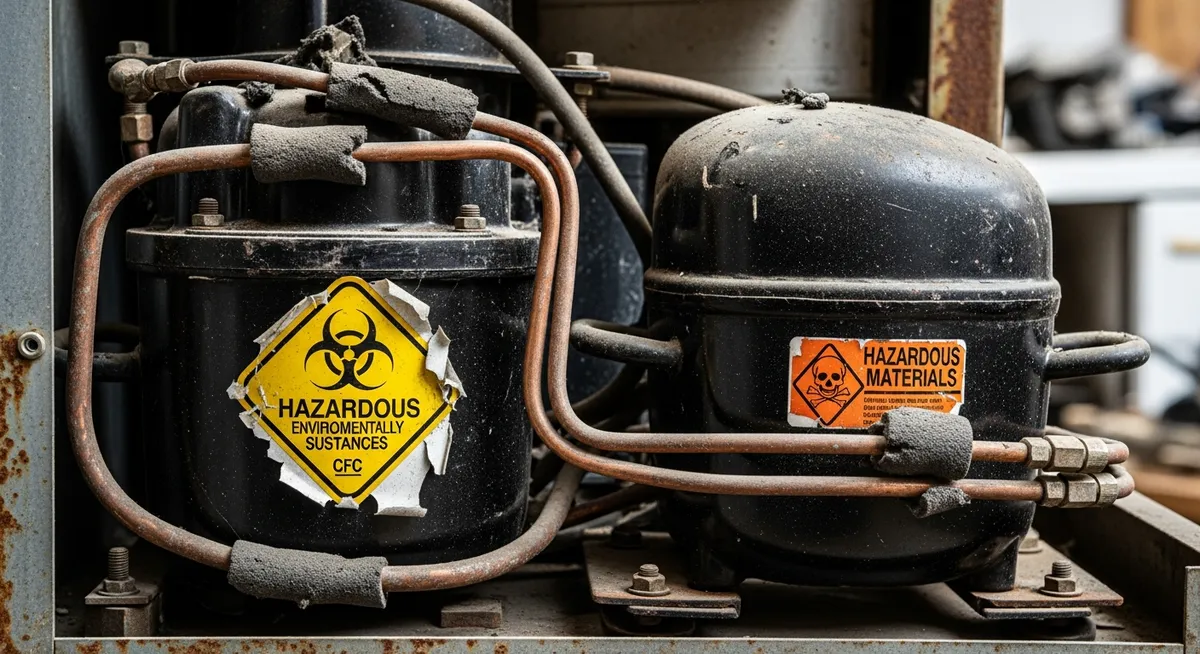
Refrigerators are classified as universal waste in California because they contain multiple hazardous materials:
- Refrigerants (CFCs, HCFCs, HFCs): Older refrigerators contain chlorofluorocarbons (Freon R-12) or hydrochlorofluorocarbons that deplete the ozone layer. Even newer units use hydrofluorocarbons that are potent greenhouse gases. Under the EPA Clean Air Act (Section 608), refrigerants must be recovered by a certified technician before disposal.
- Compressor oil: Contains lubricating oil that is classified as hazardous waste and must be drained by a licensed professional.
- Foam insulation: Older refrigerators (pre-2005) use foam blown with CFCs. This foam must be processed at a facility equipped to capture the blowing agents.
- Mercury switches: Some older chest freezers and refrigerators contain mercury tilt switches in the temperature control system.
- PCBs: Refrigerators manufactured before 1979 may contain polychlorinated biphenyls in capacitors.
California Health and Safety Code Section 25212 requires that all appliances containing refrigerants be processed by a certified technician before recycling or disposal. Simply removing the doors (the old child safety measure) is not enough.
The Financial Cost of an Old Fridge
That old refrigerator humming away in your garage isn’t just taking up space—it’s a constant drain on your wallet. Older models are notoriously inefficient, and the cost of running them adds up faster than you might think. According to energy experts, an outdated fridge can use so much more electricity that it could be costing you up to $100 more per year than a new, energy-efficient model. Over just a few years, that secondary fridge for drinks and leftovers can easily cost you hundreds in wasted energy. When you do the math, you’ll likely find that upgrading your appliance and having the old one properly removed is the smartest financial move.
The Environmental Impact
Beyond the hit to your bank account, old refrigerators pose a serious environmental risk if not disposed of correctly. These appliances contain chemicals like refrigerants and oils that are harmful to the environment. This is why federal law requires these substances to be safely recovered by certified professionals before the unit is recycled or discarded. The goal of this specialized recycling process is to protect the ozone layer and reduce the release of powerful greenhouse gases. By making sure your old fridge is handled by experts, you’re making a responsible choice that keeps hazardous materials out of our air and soil.
First, Consider Your Alternatives
Before you schedule a pickup, it’s worth exploring if your old refrigerator has any life left in it. Depending on its condition, you might be able to save money, make some cash, or help out your community. Taking a moment to consider these alternatives is also a great way to make a more environmentally friendly choice. Here are a few options to think about before you decide to haul it away for good.
Repairing Your Refrigerator
If your refrigerator is relatively new or just has a minor glitch, a repair might be more cost-effective than a replacement. Issues like a faulty thermostat, a broken ice maker, or a worn-out door seal can often be fixed for a fraction of the cost of a new appliance. You can find a local appliance repair professional to diagnose the problem and give you a quote. However, if you’re dealing with a major issue like a failed compressor on an older unit, replacing it is usually the smarter financial move, especially when you factor in the energy savings of a new model.
Selling Your Working Refrigerator
Does your old fridge still keep things cold? If it’s in good working condition, you can likely sell it. Many people search for secondhand appliances to save money, especially for a garage, rental unit, or first apartment. You can list it on platforms like Facebook Marketplace or OfferUp. To make a quick sale, be sure to clean it thoroughly inside and out, take clear, well-lit photos, and write an honest description that includes the dimensions and any cosmetic flaws. Pricing it competitively will also help you find a buyer fast and put a little extra cash in your pocket.
Donating Your Refrigerator
If your refrigerator works well and you’re feeling generous, donation is a fantastic option. Many local charities and non-profits can give your old appliance a second life with a family in need. Organizations like the Habitat for Humanity of Orange County ReStores often accept working appliances. Not only does this keep a large item out of the landfill, but some charities even offer free pickup services, saving you the hassle of moving it. Always call ahead to confirm that the organization is accepting refrigerators and to check their specific requirements for condition and pickup.
Repurposing a Non-Working Refrigerator
For those who love a good DIY project, a non-working refrigerator can be transformed into something new and useful. With a little creativity, you can repurpose it as a unique storage unit in your garage for tools, a pantry for canned goods, or even a quirky outdoor planter. The key is to ensure it’s done safely. Before you begin any project, you must remove the doors or the locking/latching mechanism to eliminate the risk of anyone, especially a child, getting trapped inside. This is a creative way to upcycle and give your old appliance a completely new purpose.
5 Options for Refrigerator Disposal in Orange County
Here are the most common ways to get rid of a refrigerator in Orange County, ranked from cheapest to most convenient:
1. Check for Retailer Take-Back Programs
If you are buying a new refrigerator, most major retailers will haul away your old one for free or a small fee as part of delivery:
- Home Depot: Free haul-away with purchase and delivery ($59 delivery fee). They will disconnect and remove the old unit.
- Lowe’s: Free haul-away with purchase and delivery. Includes basic disconnection.
- Best Buy: Haul-away for $59.99 per item with delivery. Includes refrigerant recovery.
- Costco: Free haul-away with delivery of a new appliance through their white-glove service.
This is the most cost-effective option if you are replacing your refrigerator. Schedule the haul-away at the same time as delivery.
Look for EPA RAD Program Partners
As you shop for a new refrigerator, take an extra step and check if the retailer is part of the EPA’s Responsible Appliance Disposal (RAD) Program. This voluntary partnership means the company is committed to environmentally sound disposal that goes beyond basic requirements. When you choose a RAD partner, you’re ensuring the hazardous materials in your old unit—like refrigerants, oils, and insulating foams—are safely recovered and processed. It also guarantees that valuable materials like metal, plastic, and glass are properly recycled instead of ending up in a landfill. Many major retailers participate, and you can find a participating program near you on the ENERGY STAR website. It’s a simple way to make a responsible choice, especially when you’re already arranging for a new appliance delivery.
2. See if Your Utility Company Offers a Rebate
Southern California Edison (SCE) and SoCalGas periodically offer appliance recycling programs that pay you to recycle your old refrigerator:
- SCE Appliance Recycling Program: When available, SCE offers $50 rebates and free pickup for qualifying refrigerators and freezers. The unit must be working (plugged in and cooling) and between 10 and 30 cubic feet.
- Check sce.com/rebates for current program availability. Programs run seasonally and have limited enrollment.
3. Schedule a Bulky Item Pickup with Your City
Most Orange County cities offer free bulky item collection that includes refrigerators:
| City | Program | Cost | Scheduling |
|---|---|---|---|
| Huntington Beach | Bulky item pickup (Republic Services) | Free (2 pickups/year) | Call (714) 847-3581 |
| Anaheim | Bulky item collection | Free (4 items/call) | Call (714) 238-2444 |
| Irvine | Large item pickup | Free (3 pickups/year) | Online or (949) 724-7600 |
| Santa Ana | Bulky item pickup | Free | Call (714) 647-3380 |
| Costa Mesa | Special collection | Free (2 pickups/year) | Call (949) 646-7744 |
| Fullerton | Bulky item collection | Free (2 pickups/year) | Call (714) 738-6300 |
Important: City programs often require a 1 to 2 week scheduling window, and they will only pick up from the curb. You are responsible for moving the refrigerator outside, which can be a significant challenge for heavy units (150 to 300+ pounds).
4. Let a Junk Removal Pro Handle It
For the fastest and most hassle-free option, professional junk removal companies handle everything: disconnection, removal from inside your home, loading, transportation, and proper disposal with refrigerant recovery.
Junk Smiths offers same-day refrigerator removal across Orange County. We pick up from anywhere in your home (garage, kitchen, basement) and ensure proper disposal through certified recycling facilities.
Skip the wait and the heavy lifting. Junk Smiths picks up refrigerators from anywhere in your home, handles refrigerant recovery, and recycles responsibly. Call (714) 369-8886 for a free quote.
5. Take It to a Scrap Metal Recycler
Some scrap metal yards accept refrigerators, but most require the refrigerant to be removed first by a certified technician. If you have a certificate of refrigerant recovery, scrap yards may pay $10 to $30 for the metal value. Without it, most will turn you away.
6. Take It to a Local Recycling Center Yourself
If you have a truck and an extra set of hands, you can haul your old refrigerator to a designated disposal facility. This is a hands-on approach, but it gives you direct control over the process. Orange County has several Household Hazardous Waste Collection Centers that accept refrigerators and other appliances at no cost to residents. When you drop off your fridge, it’s sent to a special plant where certified technicians safely capture harmful gases and recover valuable materials like metal and plastic for reuse. Before you go, make sure to check the hours and accepted items for your nearest Orange County collection center, as they have specific guidelines you’ll need to follow.
7. Watch for Community Disposal Events
Keep an eye out for special collection events hosted by your city or local utility providers. These events are designed to make it easier for residents to dispose of bulky items and hazardous waste, including refrigerators. Sometimes, these programs even offer incentives. For example, utility companies occasionally run recycling drives that provide a cash rebate or a credit on your bill for turning in an old, working appliance. These events aren’t always available and can be infrequent, so you’ll want to check your city’s website or your utility provider’s announcements regularly. It’s a great, low-cost option if your timing lines up with an event schedule.
How Much Does It Cost to Get Rid of a Fridge?
Costs vary significantly depending on the disposal method:
| Method | Cost | Wait Time | You Move It? | Refrigerant Handled? |
|---|---|---|---|---|
| Retailer take-back (with new purchase) | Free to $60 | Same day as delivery | No | Yes |
| SCE rebate program | Free (+$50 rebate) | 1 to 3 weeks | No | Yes |
| City bulky item pickup | Free | 1 to 2 weeks | Yes (to curb) | Varies |
| Professional junk removal (Junk Smiths) | $75 to $150 | Same day available | No | Yes |
| Scrap yard (with recovery cert) | $10 to $30 credit | Same day | Yes (to yard) | You arrange |
| Private hauler (Craigslist, etc.) | $50 to $100 | Varies | Usually | Often not |
Should I Get Rid of My Fridge Myself or Hire a Pro?
| Factor | DIY (City Pickup or Scrap Yard) | Professional (Junk Smiths) |
|---|---|---|
| Best for | Single unit, no rush | Any quantity, need it gone fast |
| Cost | Free (your time + effort) | $75 to $150 |
| Time investment | 2 to 4 hours (scheduling, moving, waiting) | 15 minutes (we handle everything) |
| Physical effort | High (150 to 300+ lbs) | None |
| Pickup location | Curbside only | Anywhere in your home |
| Scheduling flexibility | 1 to 2 week wait | Same-day available |
| Refrigerant recovery | May not be included | Always included |
| Liability if damaged | Your responsibility | Fully licensed and insured |
| Can combine with other items? | Limited (bulky item limits) | Yes, one trip for fridge plus other junk |
| Floor and wall protection | Your responsibility | We protect surfaces during removal |
How We Make Refrigerator Disposal Easy
When you book refrigerator removal with Junk Smiths, here is what happens:
- Book online or call (714) 369-8886. Tell us where the fridge is located and whether it is still connected.
- We arrive with a full crew and equipment. Our team brings dollies, straps, and floor protection to move the refrigerator safely through your home without damaging walls or flooring.
- We disconnect and remove the unit. If the refrigerator is still connected to water or power lines, we handle the disconnection. We carry it out regardless of stairs, tight hallways, or awkward angles.
- We transport to a certified recycler. The refrigerator goes to a licensed facility where a Section 608-certified technician recovers the refrigerant, the compressor oil is drained, and the metals (steel, copper, aluminum) are separated for recycling.
- Your space is clean. We sweep up any debris and leave the area ready for your new appliance or whatever you have planned.
This is especially useful during estate cleanouts, seasonal deep cleans, or kitchen renovations where you need the old fridge gone before the new one arrives.
Where Does Your Old Fridge Go After Pickup?
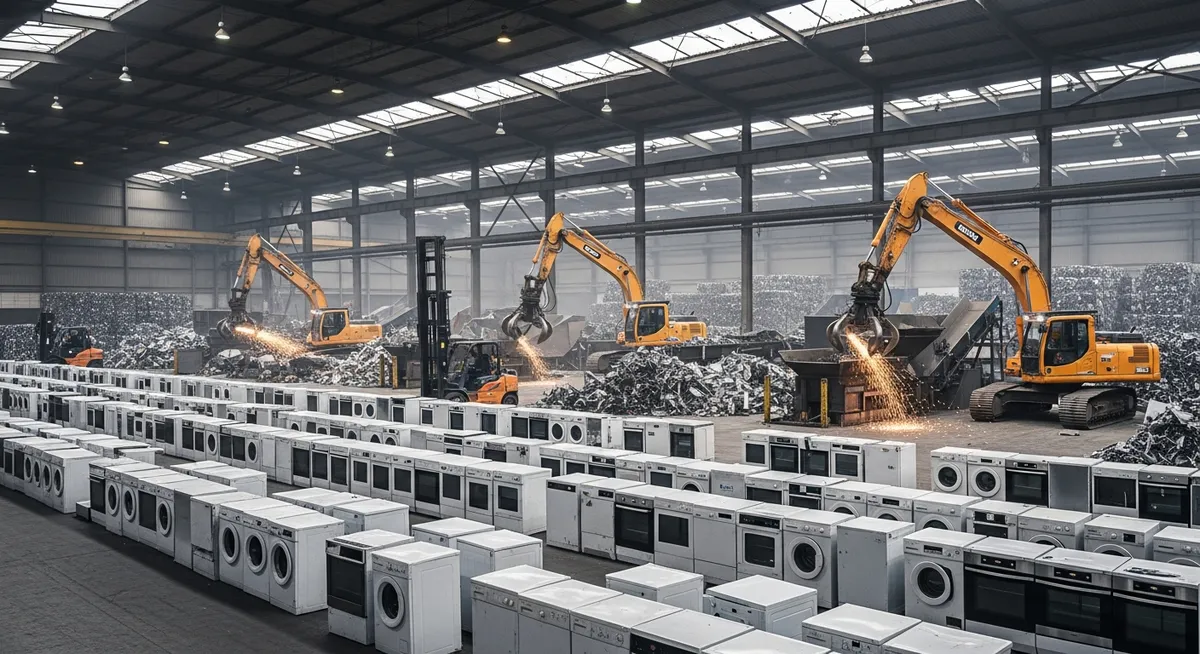
When Junk Smiths or a certified recycler processes your old refrigerator, approximately 85% to 95% of the materials are recovered and recycled:
- Steel (60% to 70% of the unit): Melted down and reused in manufacturing
- Copper wiring and tubing: Recovered and sold to copper recyclers
- Aluminum: Recycled into new aluminum products
- Plastic components: Shredded and recycled where possible
- Refrigerant: Recovered and either reclaimed for reuse or destroyed at a certified facility
- Glass shelves: Recycled with standard glass recycling
- Foam insulation: Processed to capture blowing agents before disposal
By choosing proper disposal, you are keeping hazardous chemicals out of the environment and ensuring valuable materials re-enter the supply chain. This aligns with our commitment to eco-friendly junk removal.
Prepping Your Fridge for Disposal: A Quick Checklist
- Empty the refrigerator 24 hours in advance. Remove all food, shelves, and drawers. Leave the doors open to prevent mold.
- Unplug the unit and let it defrost for 24 hours if it has a freezer section. Place towels around the base to catch melt water.
- Disconnect the water line if your refrigerator has an ice maker or water dispenser. Turn off the water supply valve behind or under the unit first.
- Measure doorways and hallways. Standard refrigerators are 30 to 36 inches wide. If your doorways are tight, you may need to remove doors from the fridge or the door frame. Our crew handles this routinely.
- Clear a path. Move furniture, rugs, and obstacles between the refrigerator and the nearest exit to prevent damage.
- Check for utility rebates first. If your fridge is still working and you qualify for an SCE rebate, you could get paid $50 instead of paying for removal.
- Consider bundling. If you have other items to remove (old washer, dryer, tires, paint cans, or bulk trash), schedule everything in one pickup to save money.
Frequently Asked Questions
Can I put a refrigerator in the dumpster?
No. It is illegal to put a refrigerator in a standard dumpster or landfill in California without first recovering the refrigerant. Violators face fines up to $10,000 under the Clean Air Act.
How much does it cost to get rid of a refrigerator in Orange County?
It depends on the method. City bulky item pickup is free but requires a 1 to 2 week wait and you must move it to the curb. Professional junk removal costs $75 to $150 but includes same-day pickup from inside your home. Retailer take-back is free to $60 with a new purchase.
Does the city of Huntington Beach pick up refrigerators?
Yes. Huntington Beach offers free bulky item pickup through Republic Services. Residents get 2 free pickups per year. Call (714) 847-3581 to schedule. The refrigerator must be placed at the curb.
Can I just remove the doors and leave a fridge at the curb?
Removing the doors is a child safety precaution, but it does not address the hazardous refrigerant inside. You still need a certified technician to recover the refrigerant before disposal. Simply leaving a fridge at the curb without scheduling a pickup is considered illegal dumping in most OC cities.
Why Door Removal is a Critical Safety Step
You’ve likely heard that you should always remove the doors from an old refrigerator, and there’s a critical reason: child safety. This practice started because older models had latching doors that couldn’t be opened from the inside, creating a dangerous entrapment risk. While modern fridges use magnetic seals, removing the doors is still the best way to ensure no one can get trapped inside. It’s a simple action that eliminates a serious hazard, especially if the appliance will be sitting at the curb while awaiting a scheduled pickup.
But door removal is just the first step. While it solves the immediate physical risk, it doesn’t make the refrigerator legal to dump. These appliances contain hazardous materials like Freon that must be handled by a certified technician under California law. Leaving a doorless fridge on the curb is still considered illegal dumping and poses an environmental threat. Proper disposal requires a professional to handle the safe recovery of refrigerants before the unit is recycled, protecting both your community and the environment.
What is Freon and why does it matter?
Freon is a brand name for CFC-based refrigerants (R-12) used in refrigerators made before the mid-1990s. CFCs destroy the ozone layer and are banned under the Montreal Protocol. Even newer refrigerants (R-134a, R-600a) are potent greenhouse gases. Federal law requires all refrigerants to be captured by a certified technician before disposal.
How long does refrigerator removal take?
With Junk Smiths, the actual removal takes 15 to 30 minutes depending on location and accessibility. We offer same-day scheduling, so you can have the refrigerator gone within hours of calling.
Can I donate a working refrigerator?
Yes. If your refrigerator is less than 10 years old and still works, organizations like Habitat for Humanity ReStore, St. Vincent de Paul, and local churches may accept it. Most require the unit to be in good cosmetic condition with no mechanical issues.
Do you remove commercial refrigerators and walk-in coolers?
Yes. Junk Smiths handles commercial refrigerator disposal for restaurants, grocery stores, and office break rooms. Contact us for commercial pricing.
Key Takeaways
- Understand the real cost of your old fridge: Keeping an inefficient refrigerator can add hundreds to your energy bills over time, and illegal dumping comes with steep fines. Proper disposal is a legal requirement in California because these appliances contain hazardous materials.
- Explore your low-cost disposal options first: Before paying for removal, check for utility company rebates that might pay you for your old unit. Also, consider free city bulky item pickups if you can move the fridge to the curb yourself and don’t mind waiting for a scheduled collection.
- Choose a removal method based on your needs: For the most convenient and safest solution, a professional junk removal service handles everything from in-home pickup to certified recycling. This is the best choice when you need it gone fast or cannot do the heavy lifting.